Chikuzenni (Nishime)
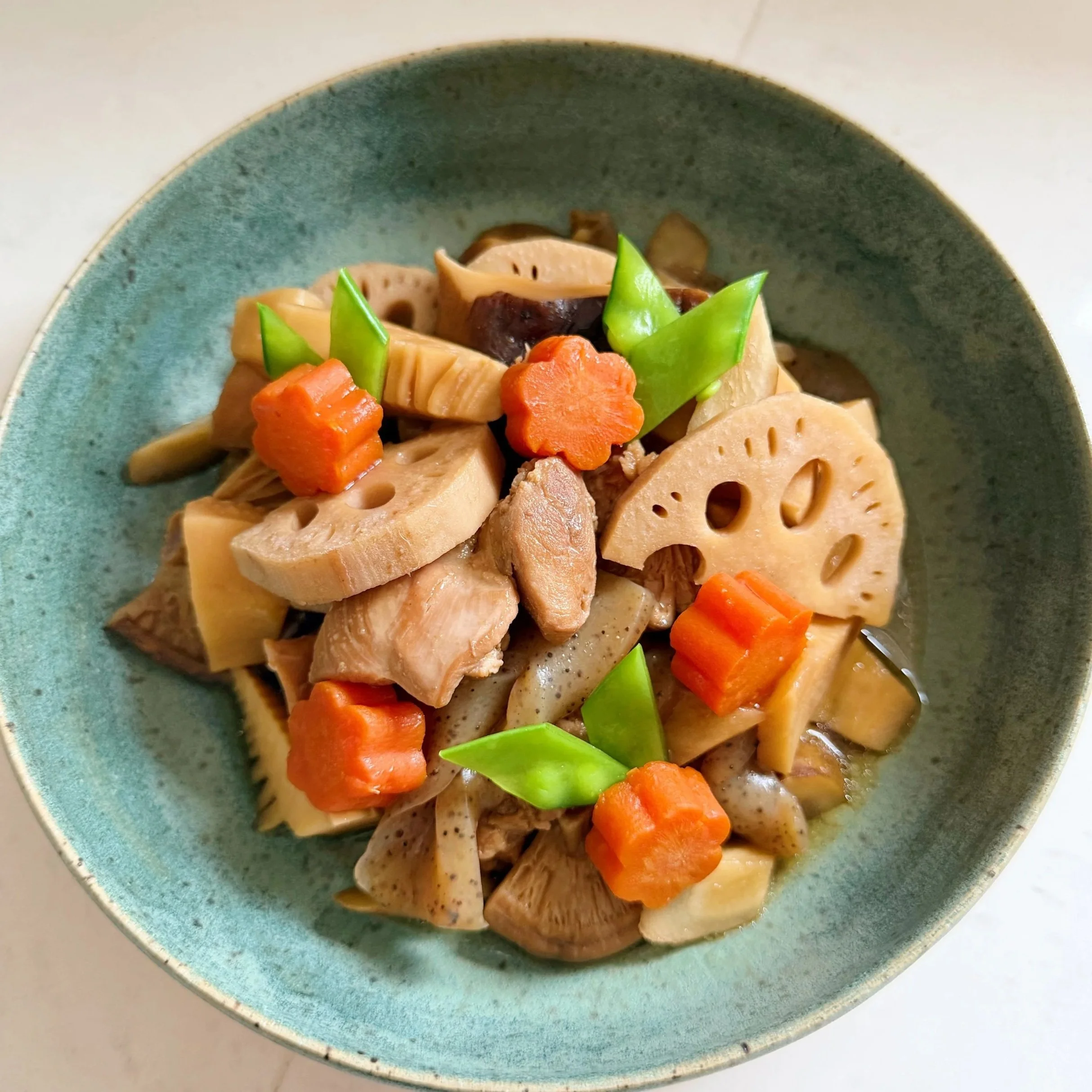
Chikuzenni, or Nishime - Japanese Simmered Root Vegetables and Chicken
Chikuzenni, also called Nishime is a dish I make every year as one of the New Year’s Day dish without fail.
As soon as the New Year approaches, this is one of the first recipes that comes to mind. Growing up in Japan, Chikuzenni was always part of our New Year table, slowly simmering on the stove while the house filled with a familiar, comforting aroma. Making it now feels like carrying on a quiet tradition - one I love sharing with my family.
Chikuzenni is a classic Japanese simmered dish made with chicken and root vegetables, gently cooked in a soy-based broth. It’s simple, comforting, and deeply connected to Japanese New Year foods, also known as osechi ryori. Each ingredient is carefully prepared and simmered so it absorbs flavor while keeping its texture, making it both hearty and elegant.
The Background of Chikuzenni
Chikuzenni (筑前煮) is a traditional Japanese simmered dish made with chicken and a variety of vegetables, most commonly enjoyed during the New Year as part of osechi ryori. The name “Chikuzenni” comes from Chikuzen Province, an old name for part of present-day Fukuoka in Kyushu, where this dish is said to have originated.
What Does Chikuzenni Mean?
The word Chikuzenni literally means “a simmered dish from Chikuzen.” Unlike some other simmered dishes where ingredients are cooked directly in broth, Chikuzenni is unique because the ingredients are stir-fried first, then simmered together. This extra step helps seal in flavor and gives the dish a richer taste and better texture.
Chikuzenni is also known as Nishime (煮しめ), a term that refers to vegetables being slowly simmered until the liquid is reduced and the flavors are deeply absorbed. While “Nishime” can describe various simmered dishes across Japan, Chikuzenni is one of the most well-known versions.
History and Cultural Background
Chikuzenni has its roots in Kyushu’s local home cooking, where chicken was more commonly used than seafood. Over time, the dish spread throughout Japan and became a staple of New Year cuisine. Its ability to keep well for several days made it especially suitable for osechi ryori, which was traditionally prepared in advance so families could rest during the New Year holidays.
Each ingredient in Chikuzenni carries symbolic meaning, making it especially meaningful for New Year celebrations. Lotus root (renkon) represents clarity and a clear path forward, burdock root (gobo) symbolizes strength and stability, and carrots add color and celebration to the dish. Together, these ingredients reflect hopes for a healthy, prosperous year ahead.
Tips for Authentic Flavor
Stir-frying the ingredients before simmering helps lock in flavor and prevents the vegetables from breaking apart.
Using the shiitake soaking liquid adds natural umami and depth to the dish.
Chikuzenni tastes even better the next day, making it perfect for New Year meal prep.
RECIPE
Servings: 5-6
Time: 60 min
Ingredients:
1/2 lb chicken thigh
5 dried shiitake mushrooms
1 pcs konjac
1/2 lb renkon (lotus root)
4 oz burdock root (gobo)
1 carrot
4-5 pcs snow pea
Broth
Instructions:
Make Shiitake Broth
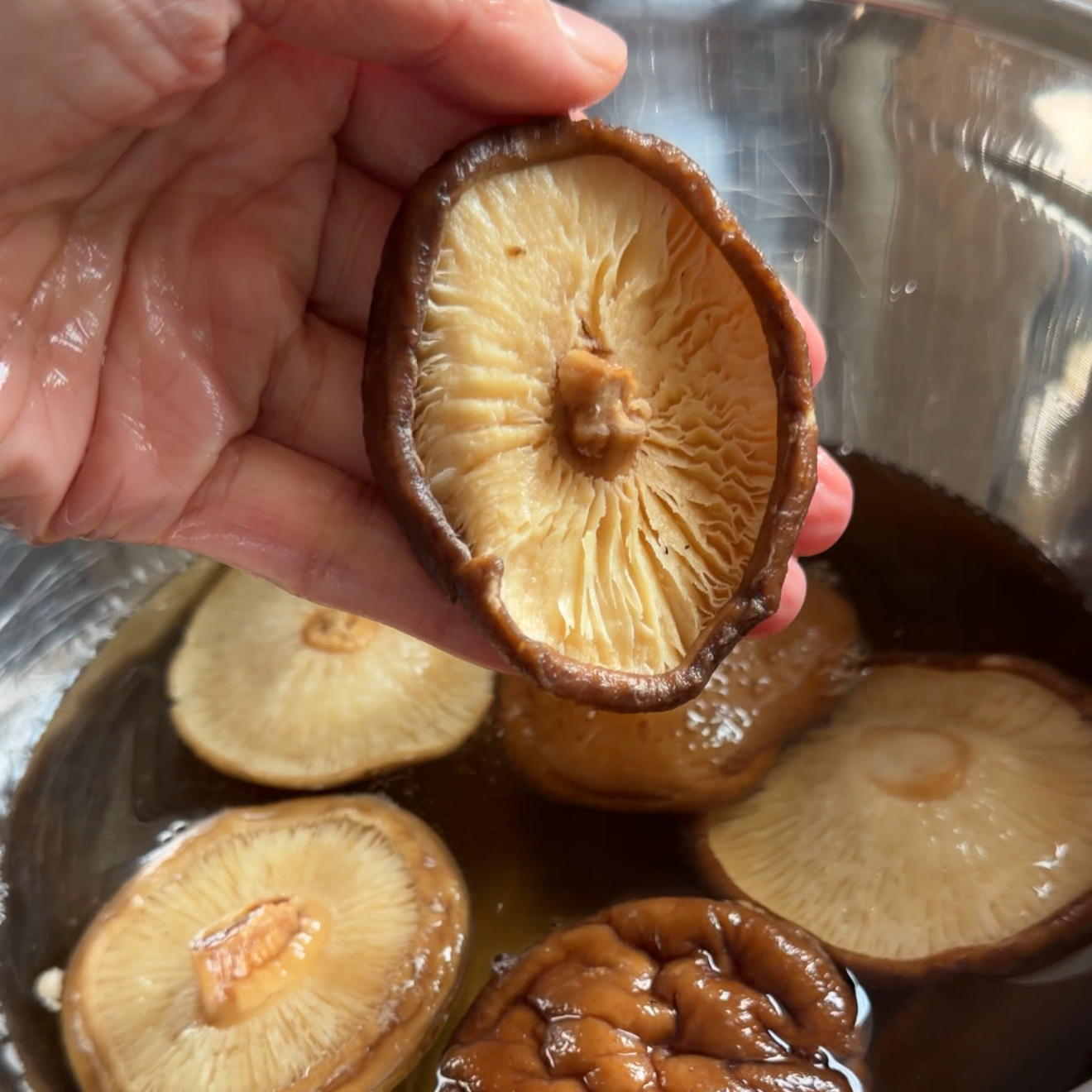
Rehydrate the dried shiitake mushrooms in 2 cups water for 30–60 minutes.
Save the soaking liquid for later; it will become the base of the broth.
Cut the Vegetables
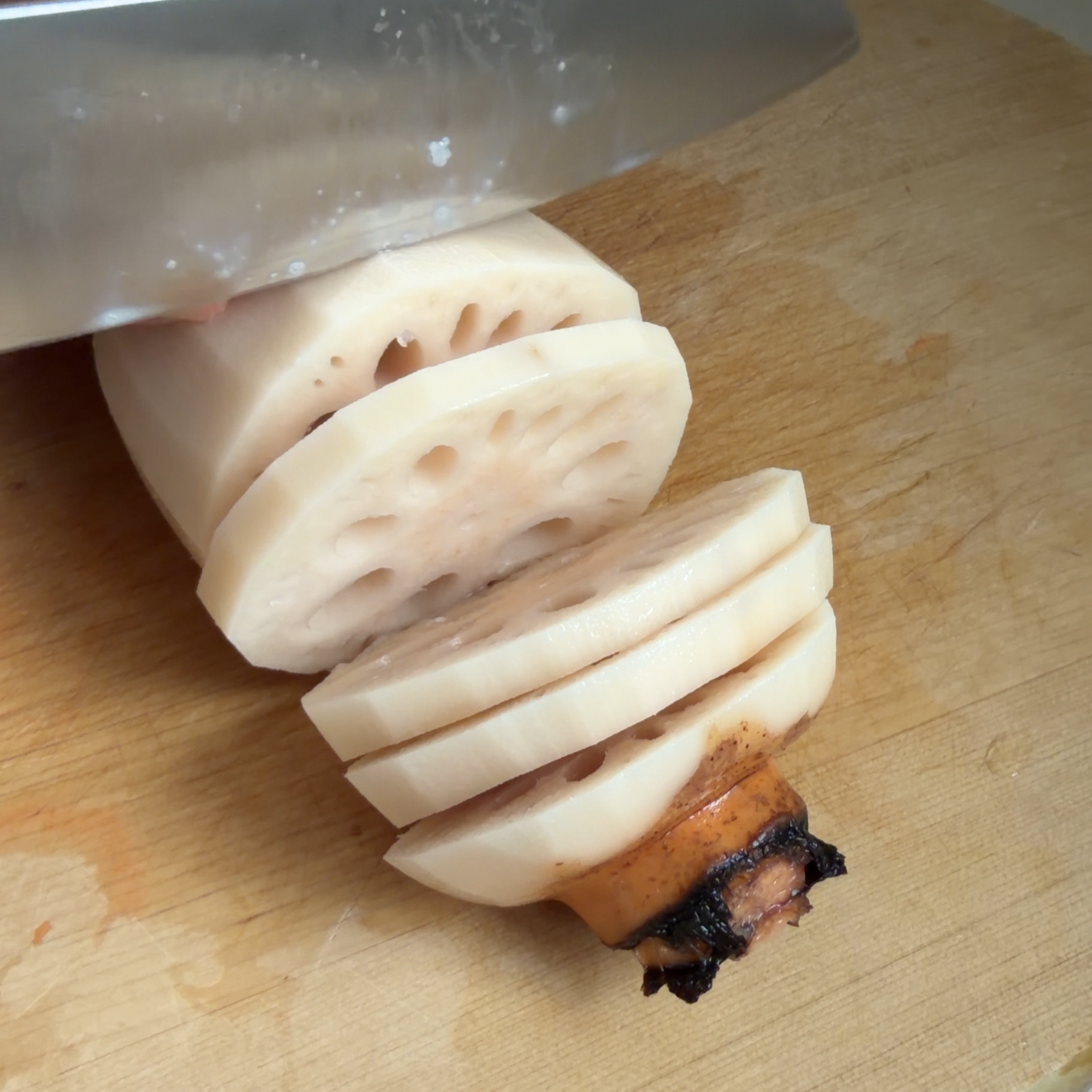
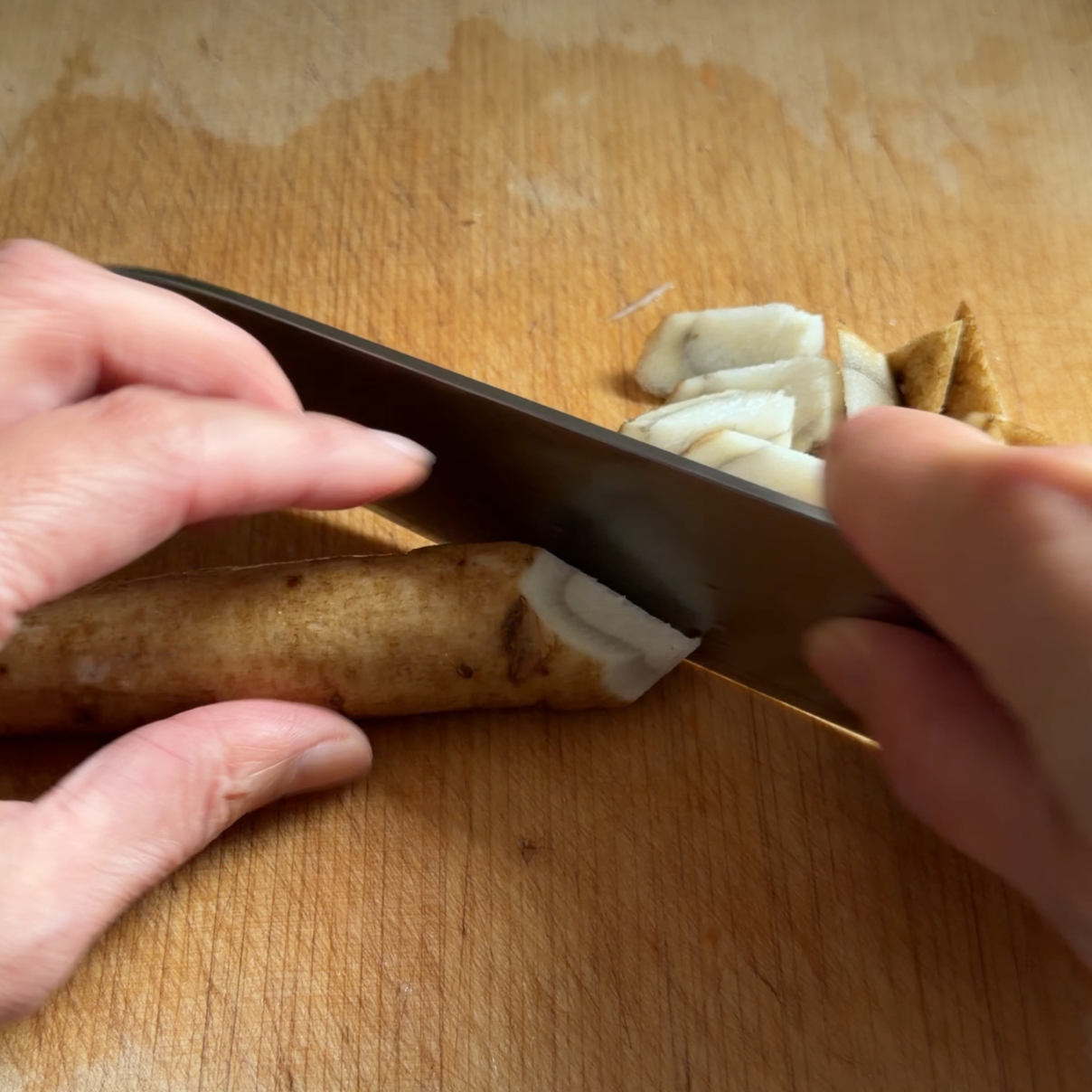
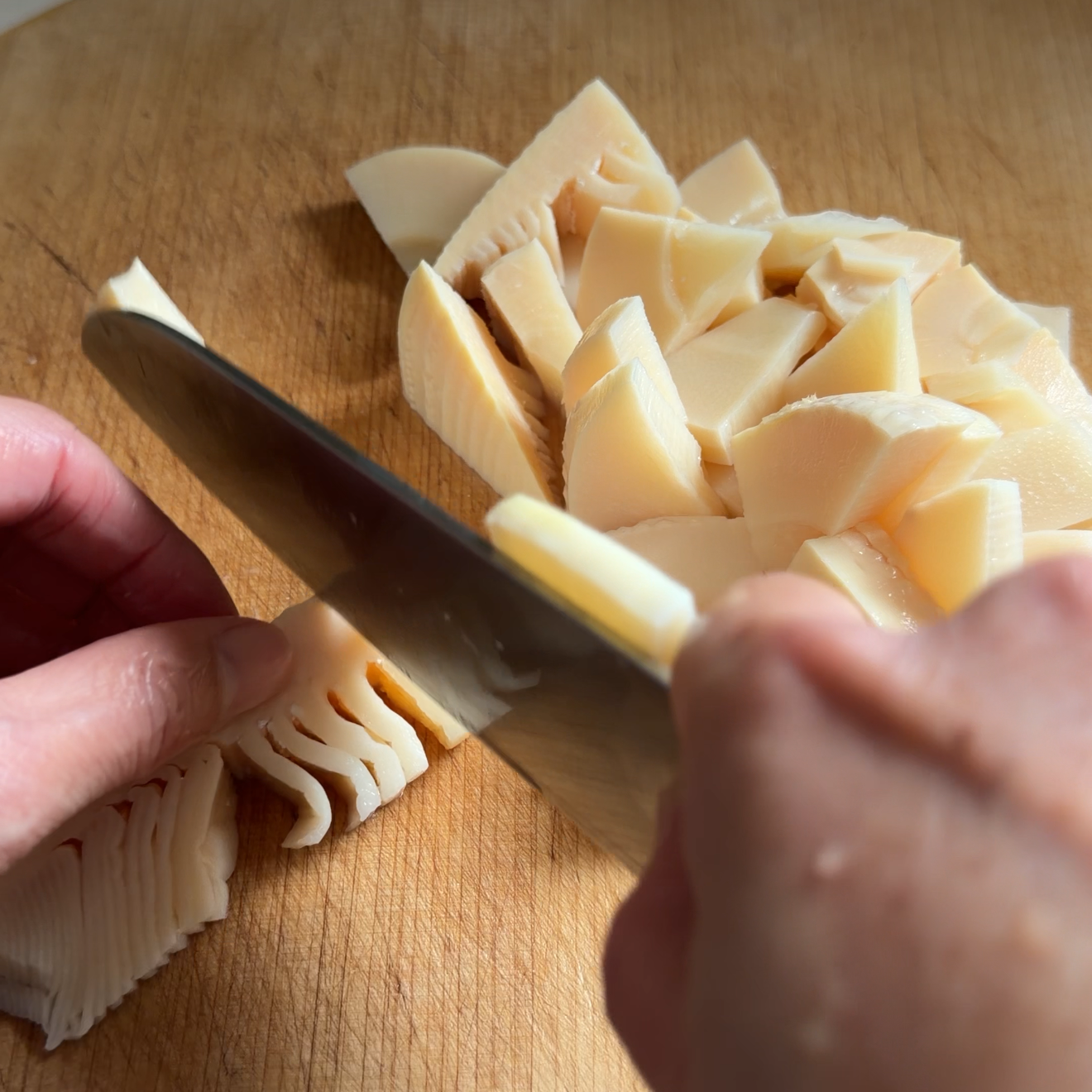
Cut the renkon, gobo, carrot, chicken, konjac, and rehydrated shiitake into bite-sized pieces.
Soak the renkon and gobo in water.
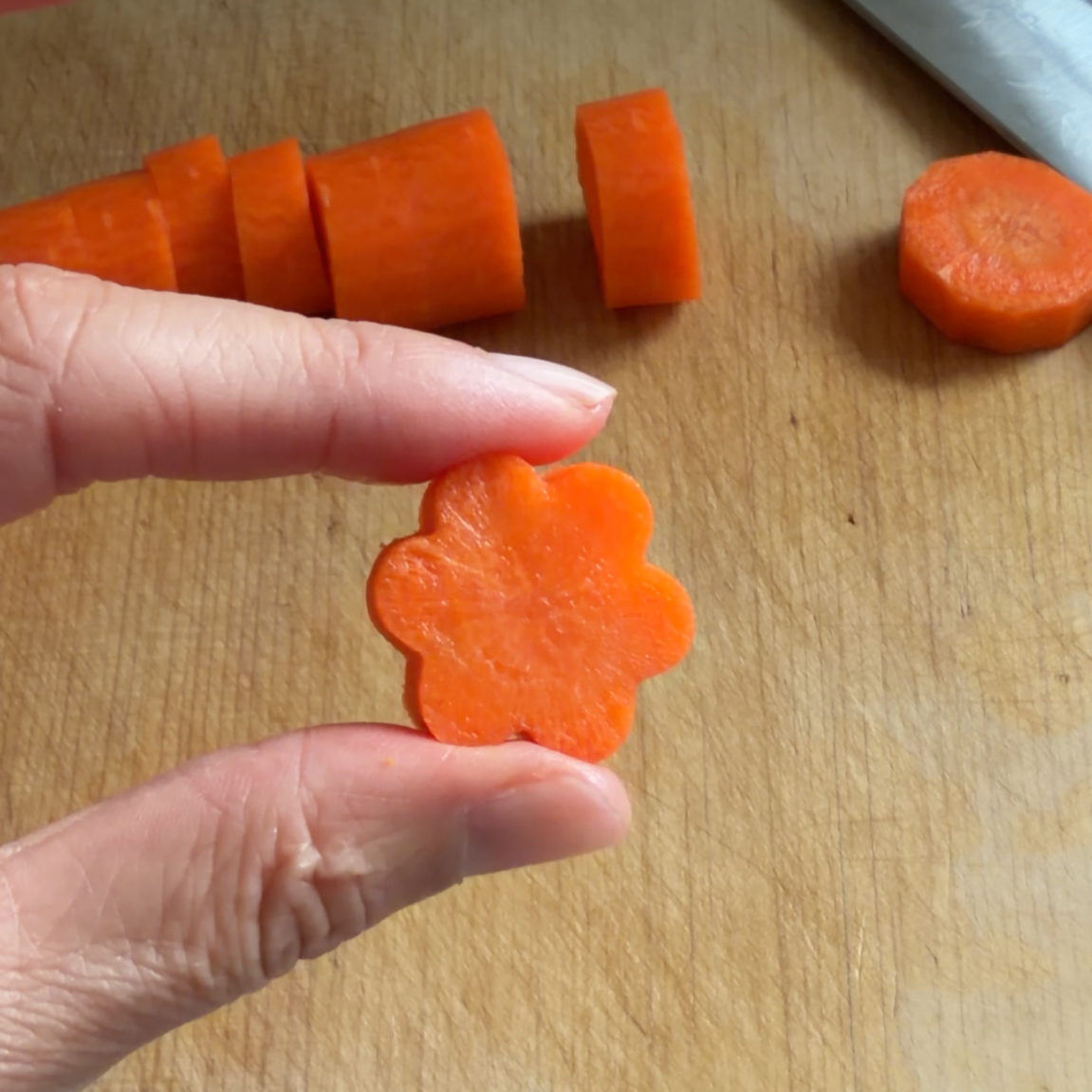
If you have cookie cutters, shape the carrots into your favorite designs.
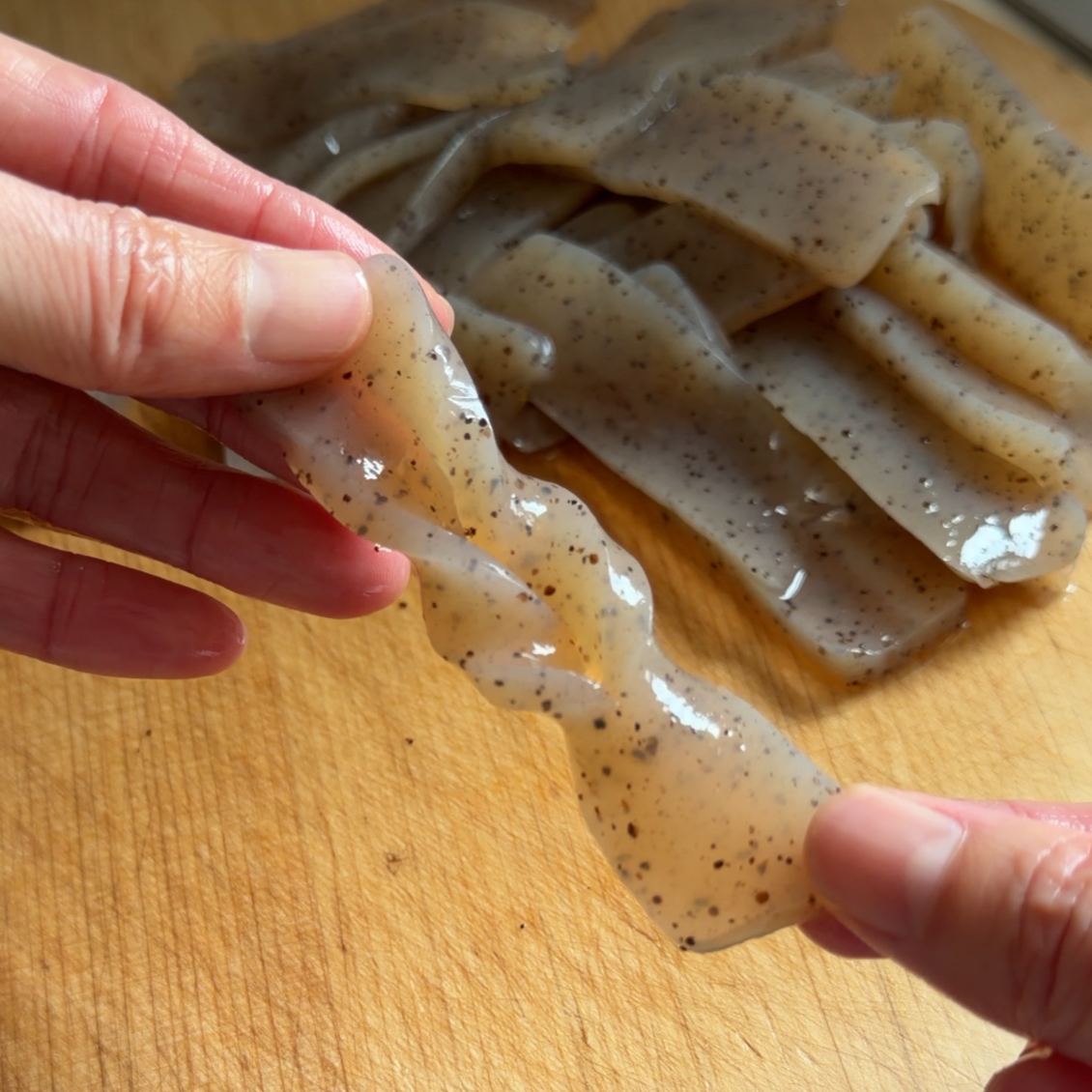
You can make twisted bows by cutting a slit in the middle of each konjac slice and pushing one end through the slit.
Cook the Ingredients
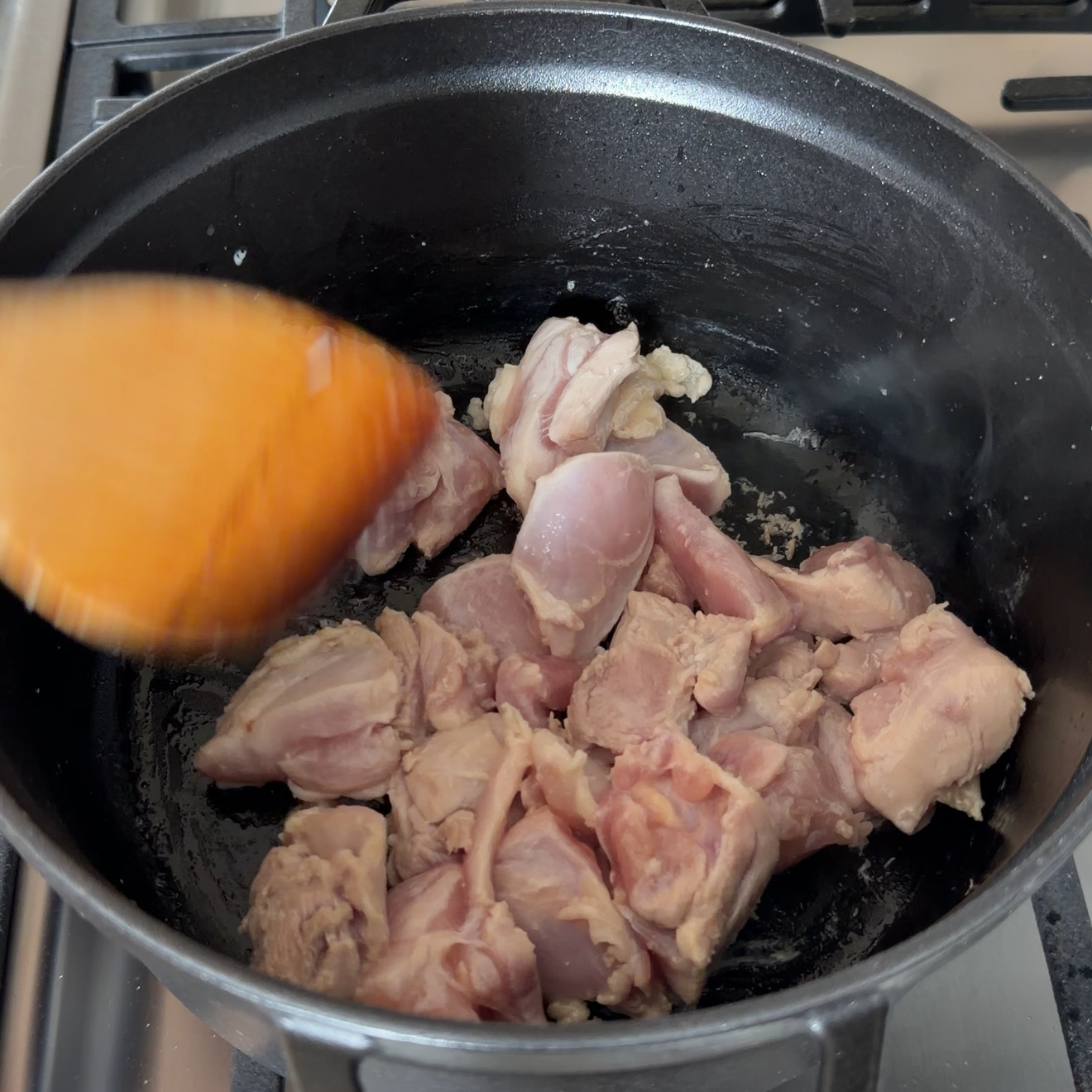
Heat a pan with cooking oil over medium heat.
Add the chicken and lightly stir-fry, sprinkling with a pinch of salt.
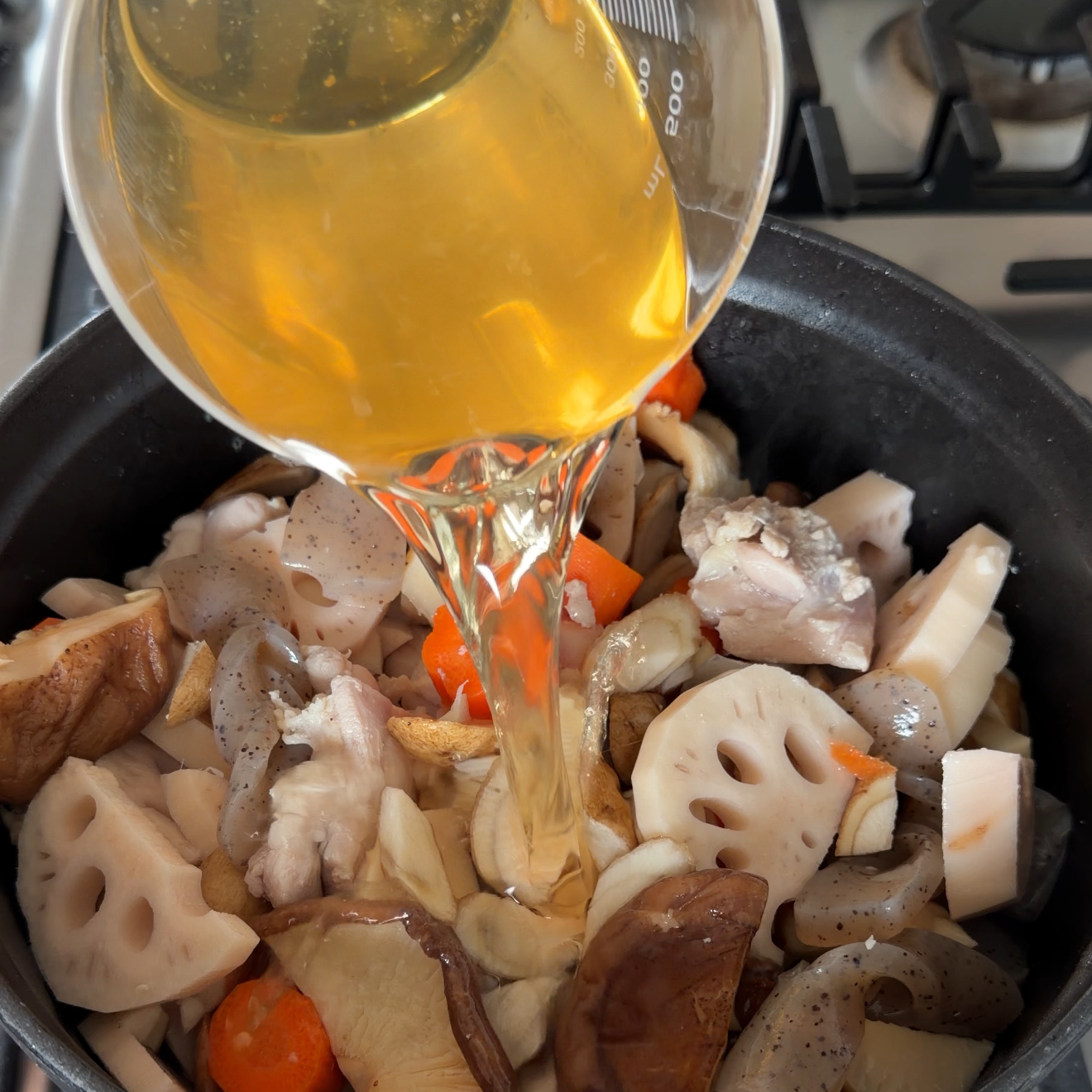
Add the renkon, gobo, carrot, konjac, and shiitake mushrooms, and stir-fry for about 1 minute.
Add the shiitake broth, soy sauce, sake, and mirin. Bring everything to a boil.
Simmer
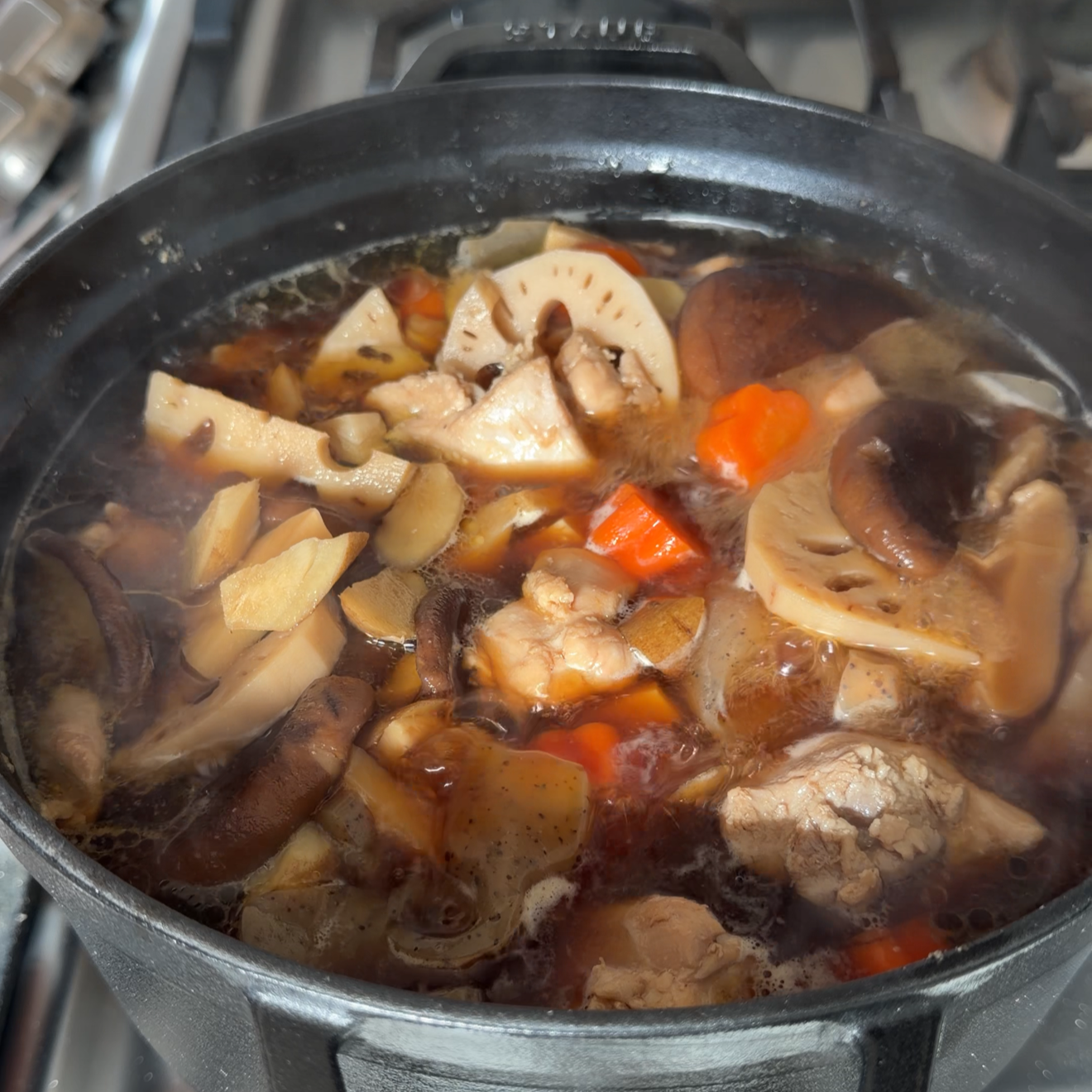
Cover with a lid and simmer for 10 minutes.
Remove the lid and simmer for another 10 minutes, allowing the flavors to deepen.
Cook the Snow Peas & Assemble
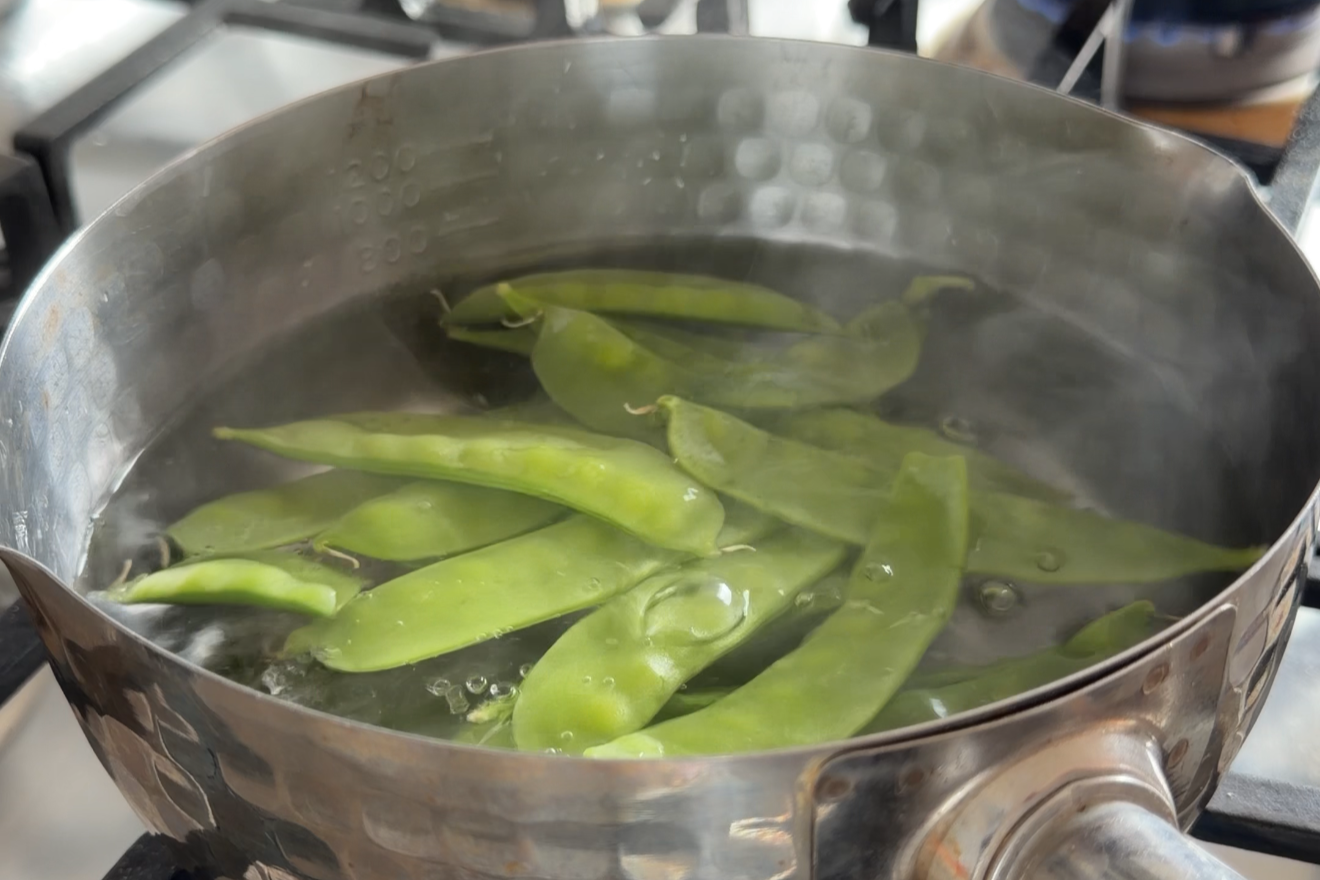
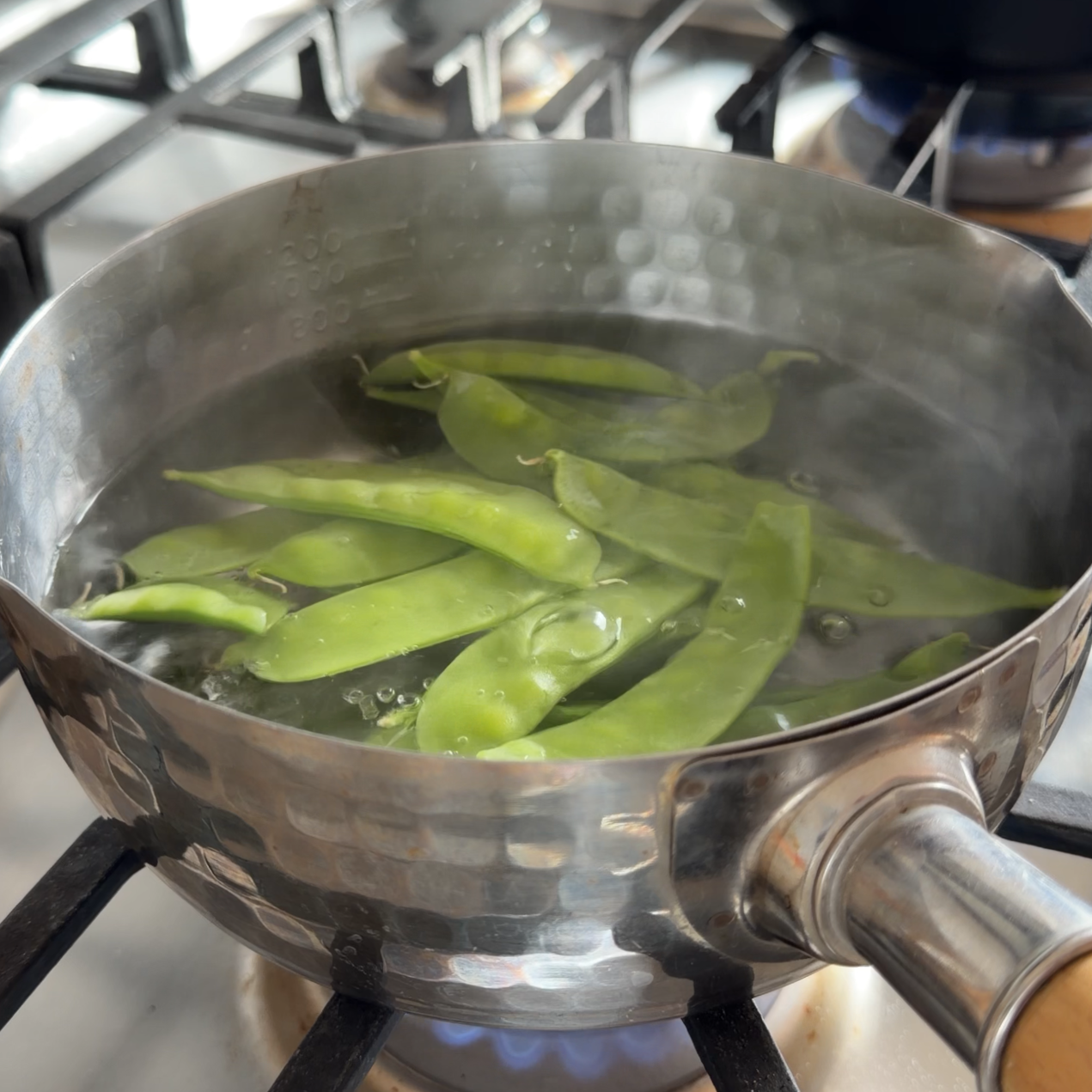
While the Chikuzenni is cooking, bring a small pot of water to a boil and blanch the snow peas for about 1 minute.
Drain, cut into strips, and set aside.
Serve the Chikuzenni on a plate and finish with the snow peas on top.
My Kitchen Tool:
FAQ
What is Chikuzenni?
Chikuzenni is a traditional Japanese simmered dish made with chicken and vegetables like lotus root, burdock root, and carrots cooked in a soy-based broth.
Is Chikuzenni the same as Nishime?
Chikuzenni is a type of Nishime. “Nishime” refers broadly to simmered dishes, while Chikuzenni specifically includes chicken and is associated with the Kyushu region.
What vegetables are used in Chikuzenni?
Common vegetables include lotus root (renkon), burdock root (gobo), carrots, shiitake mushrooms, and konjac.
Can I make Chikuzenni ahead of time?
Yes! Chikuzenni actually tastes better the next day as the flavors deepen, making it perfect for meal prep or New Year dishes.
How long does Chikuzenni last?
It can be stored in the refrigerator for up to 3–4 days in an airtight container.