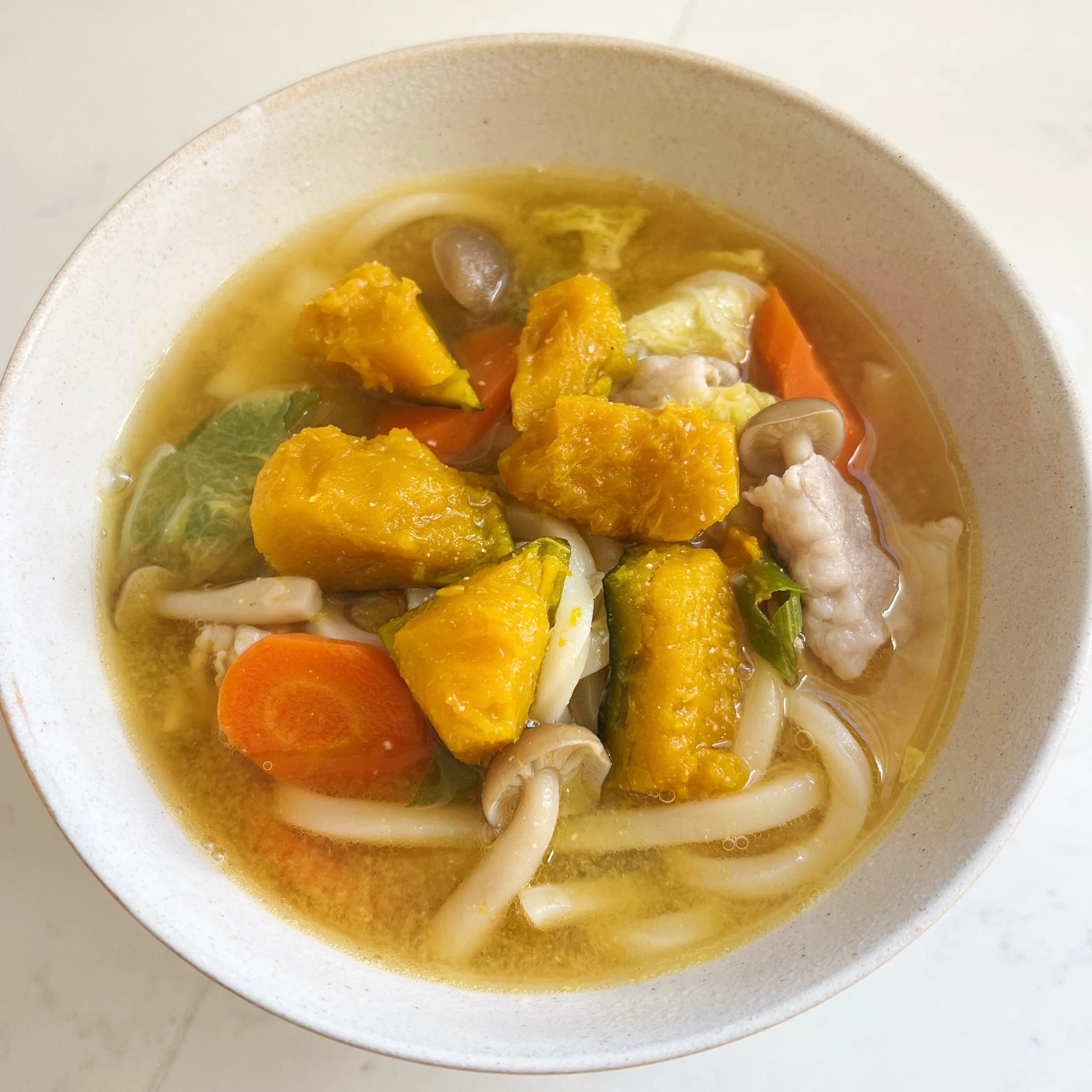
Kabocha Miso Udon - Cozy, Hoto Noodles Inspired Japanese Noodle Soup
If you’ve ever traveled through Yamanashi Prefecture in Japan, you might already know about Hoto - a beloved local noodle dish packed with Kabocha and other vegetables simmered in a rich miso broth. During my trip earlier this year, I had the chance to enjoy an authentic bowl right in Yamanashi. It was hearty, rustic, and incredibly comforting.
One thing that stood out to me was how the kabocha (Japanese pumpkin squash) slowly melted into the broth, giving the soup a naturally sweet, nutty flavor that made the entire dish feel like a warm hug. Inspired by that experience, I recreated this Kabocha Miso Udon at home - a cozy, family-friendly noodle dish perfect for cold days.
This recipe keeps things simple and approachable, but still delivers the depth of flavor you’d expect from a traditional miso-based hotpot-style udon.
What is Hoto?
Hoto (ほうとう) is a traditional noodle dish from Yamanashi Prefecture, known for its rustic, comforting flavors. Unlike typical udon, Hoto uses wide, flat noodles made from wheat flour that are closer to dumpling-like strips than standard udon. The noodles are simmered directly in the pot along with seasonal vegetables—especially kabocha, which is essential for creating the dish’s naturally sweet, creamy broth. The soup base is typically miso, giving it a rich, earthy flavor that pairs perfectly with the softened vegetables. Hōtō is often enjoyed as a hearty, warming meal during the colder months, and it’s considered a specialty deeply rooted in Yamanashi’s history and local food culture. It’s the kind of dish that feels homemade, humble, and incredibly satisfying.
Why You’ll Love This Kabocha Miso Udon
Cozy & comforting: The kabocha melts into the broth, making it naturally sweet and velvety.
One-pot meal: Everything cooks in one pot—minimal cleanup.
Loaded with vegetables: Napa cabbage, daikon, carrot, mushrooms…it’s nourishing and kid-friendly.
Tips & Variations
Use frozen udon is my personal favorite for the best chewy texture. But please use Hoto noodles if you find one!
Add tofu for extra protein.
Adjust sweetness by adding more kabocha - more kabocha = more sweet, creamy broth.
Try different mushrooms such as maitake or shiitake for a deeper umami flavor.
Spice it up with a touch of shichimi togarashi.
RECIPE
Servings: 3-4
Time: 30 min
Ingredients:
6 oz pork belly slice
1/4 kabocha
4 leaves napa cabbage
1/4 medium daikon
1 small carrot
1/2 pack shimeji mushrooms
2 scallions
For the soup
6 cups water
1 tbsp dashi powder
3 tbsp sake
3 tbsp miso
1 tbsp mirin
1 tbsp soy sauce
2 servings udon (frozen or dried udon noodles)
Instructions:
Make the broth
In a large pot, add water, dashi powder, and sake.
Bring it to a boil.
Prepare the ingredients
Cut the pork, kabocha, Napa cabbage, daikon, carrot, and scallions.
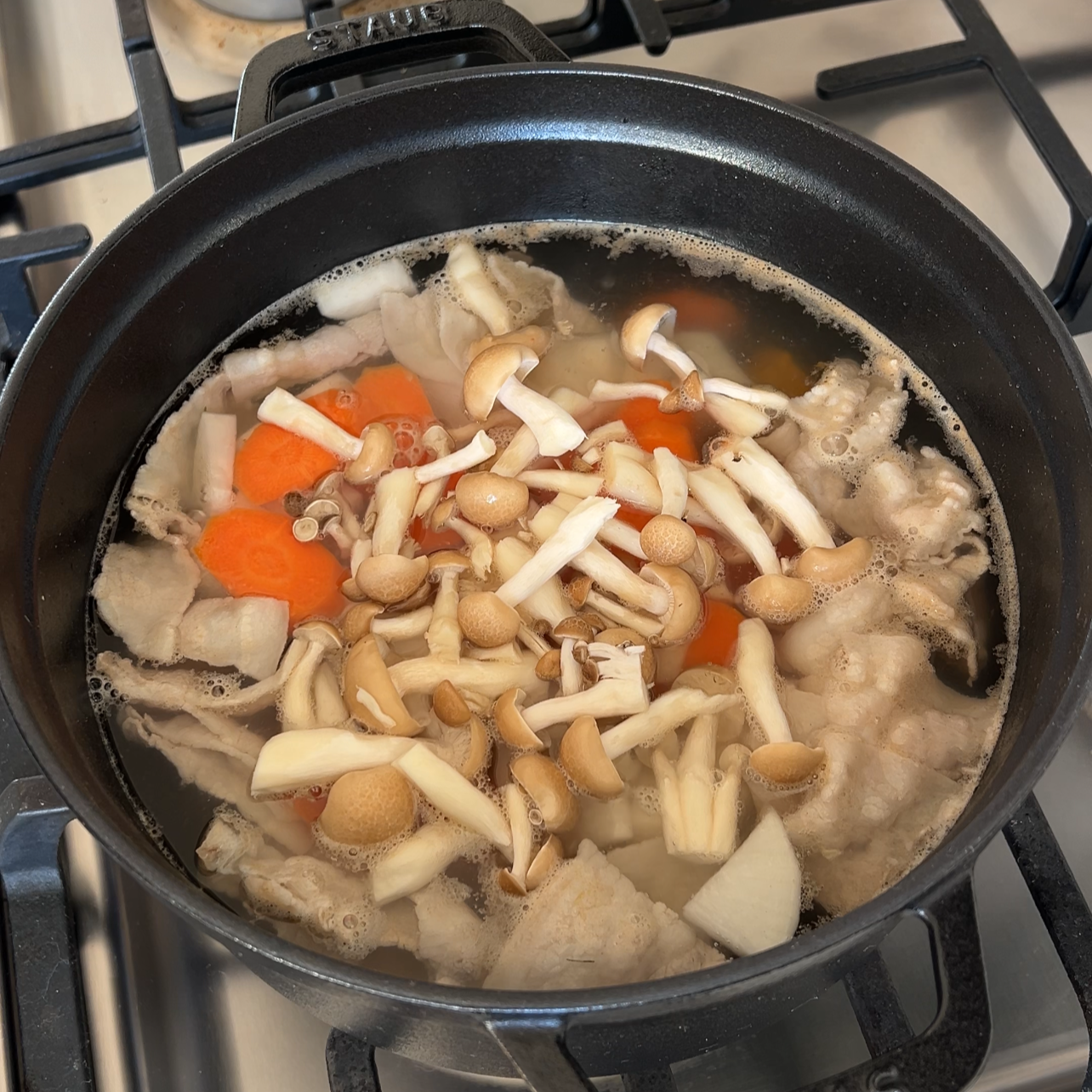
Break the shimeji mushrooms into small clusters.
Cook the meat & vegetables
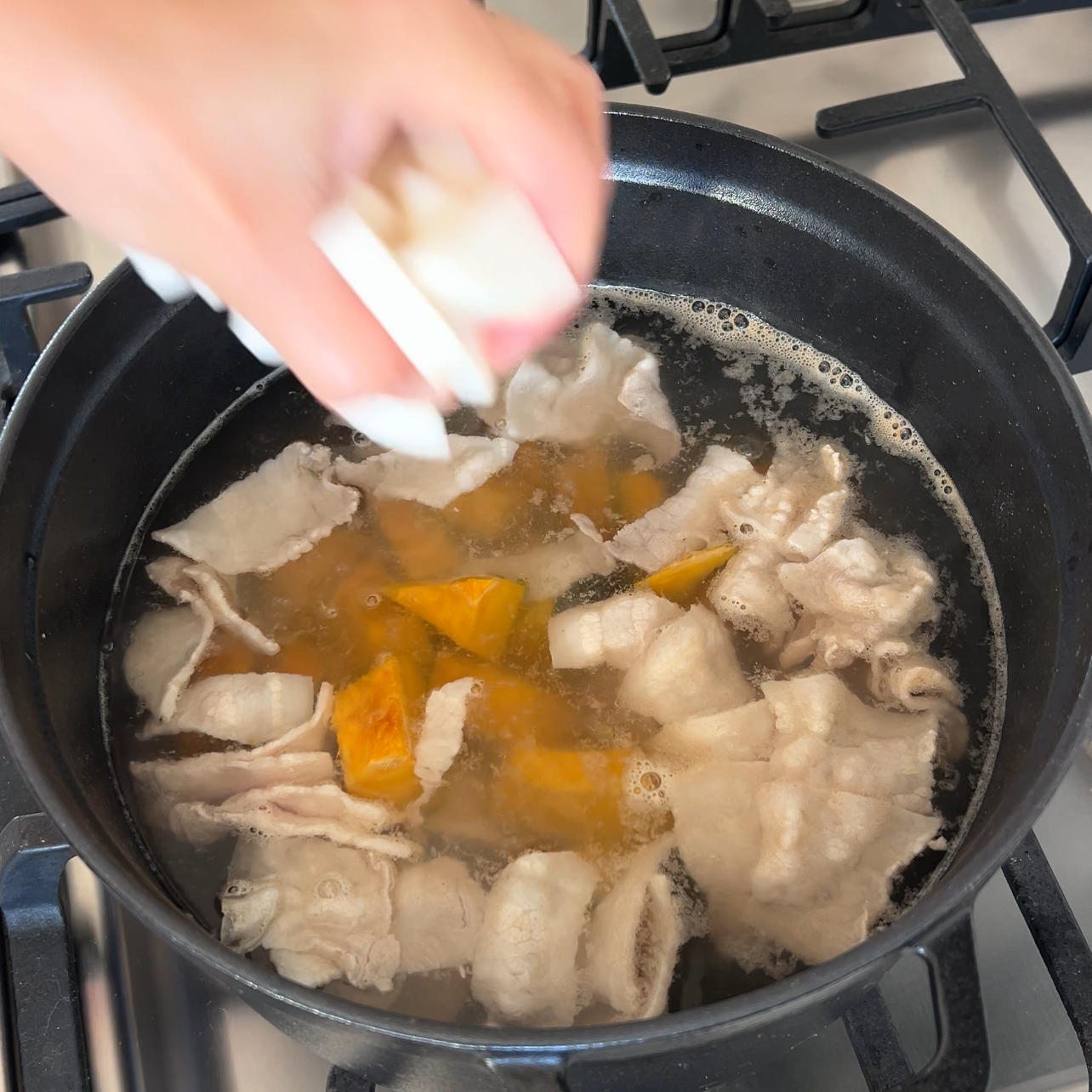
Add the pork and all vegetables to the broth.
Simmer with a lid on for 6–8 minutes, or until everything is tender.
Season the soup
Add the miso, mirin, and soy sauce.
Stir until the miso fully dissolves.
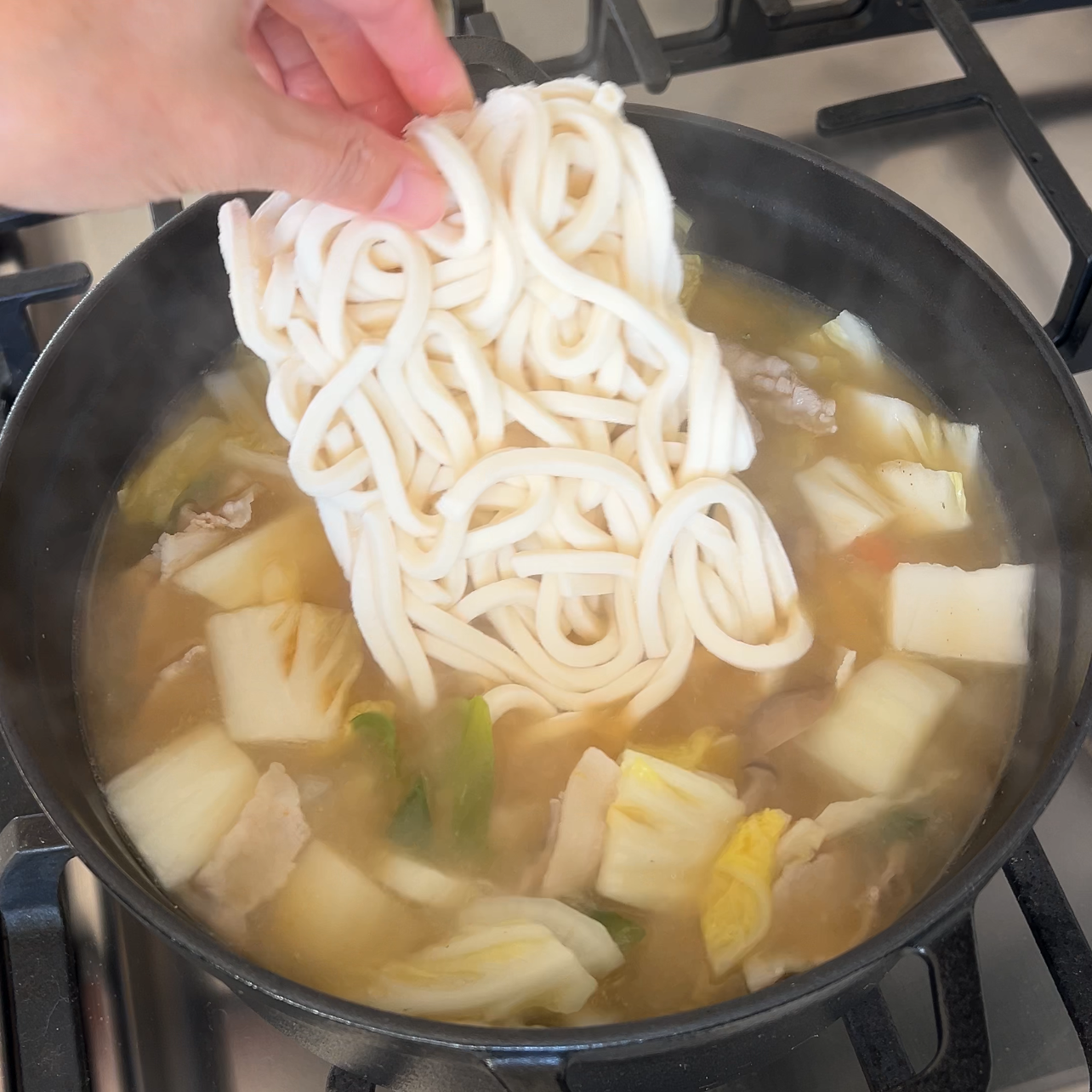
Add the udon
Add the udon noodles and cook for another 3 minutes until warmed through.
Enjoy immediately while the broth is still creamy and sweet from the softened kabocha.

Staub 4qt cocotte works perfect for 3-4 servings



FAQ
What is Kabocha Miso Udon?
Kabocha Miso Udon is a comforting Japanese noodle soup made with kabocha squash, udon noodles, vegetables, and a savory miso broth. Inspired by Hoto, a traditional noodle dish from Yamanashi Prefecture, this recipe combines the natural sweetness of kabocha with the rich, earthy flavor of miso for a hearty meal perfect for chilly days.
What is the difference between Hoto and udon?
Hoto is a regional Japanese noodle dish from Yamanashi Prefecture, traditionally made with wide, flat wheat noodles simmered directly in a miso-based broth with vegetables, especially kabocha squash. Regular udon typically uses thicker, rounder noodles. This recipe uses udon noodles as a convenient alternative while keeping the comforting flavors of traditional Hoto.
What is kabocha squash, and can I substitute it?
Kabocha is a Japanese winter squash with deep orange flesh, a slightly sweet, nutty flavor, and a texture that becomes tender and creamy when cooked. It is an important ingredient in Hoto because it adds natural sweetness and richness to the broth. If you cannot find kabocha, you can substitute butternut squash or another sweet winter squash, although the flavor and texture will be slightly different.
Can I use frozen udon noodles?
Yes! Frozen udon noodles work wonderfully in this recipe. They have a pleasantly chewy texture and are easy to prepare. Add them to the simmering soup near the end of cooking and follow the package instructions until they are heated through. Dried udon noodles also work well; cook them according to the package directions before adding them to the soup, or adjust the cooking method as needed.
What kind of miso should I use for Kabocha Miso Udon?
You can use white miso, red miso, or awase miso (a blend of white and red miso). White miso has a milder, slightly sweeter flavor, while red miso offers a deeper, more robust taste. Awase miso is a great all-purpose choice for this cozy noodle soup. Since miso varies in saltiness, taste the broth before adding any extra seasoning.
Can I make this Japanese noodle soup vegetarian?
Absolutely! Simply omit the pork belly and use a vegetarian dashi powder or vegetable broth instead of dashi that contains fish. You can add more mushrooms, tofu, or extra vegetables for a satisfying vegetarian version. Be sure to check the labels on your dashi powder and miso to confirm they meet your dietary preferences.
What other vegetables can I add to Kabocha Miso Udon?
This soup is flexible and works well with a variety of vegetables. You can add Japanese mushrooms, burdock root (gobo), taro, spinach, or extra napa cabbage. These ingredients complement the miso broth and make the soup even heartier. If you add vegetables that take longer to cook, such as root vegetables, slice them thinly so they become tender at the same time as the other ingredients.
Can I make Kabocha Miso Udon ahead of time?
Yes, you can prepare the broth with the pork and vegetables ahead of time. For the best noodle texture, store the udon separately and add it just before serving. This prevents the noodles from absorbing too much broth and becoming overly soft. When reheating, warm the soup gently on the stovetop and add a little water or dashi if the broth has thickened.
How do I store leftover Kabocha Miso Udon?
Store leftover soup in an airtight container in the refrigerator for up to 3–4 days, provided it has been cooled and refrigerated promptly. The kabocha may soften further, and the noodles may absorb some of the broth. For the best results, store cooked udon separately from the soup whenever possible. Reheat thoroughly before serving.
What should I serve with Kabocha Miso Udon?
Kabocha Miso Udon is a hearty, satisfying meal on its own, but it also pairs nicely with simple Japanese side dishes. Try serving it with cucumber sunomono, Japanese pickles (tsukemono), edamame, or a small side of rice. For an extra cozy Japanese-inspired meal, enjoy it with a cup of hot green tea.