Non-Spicy Mabo Eggplant
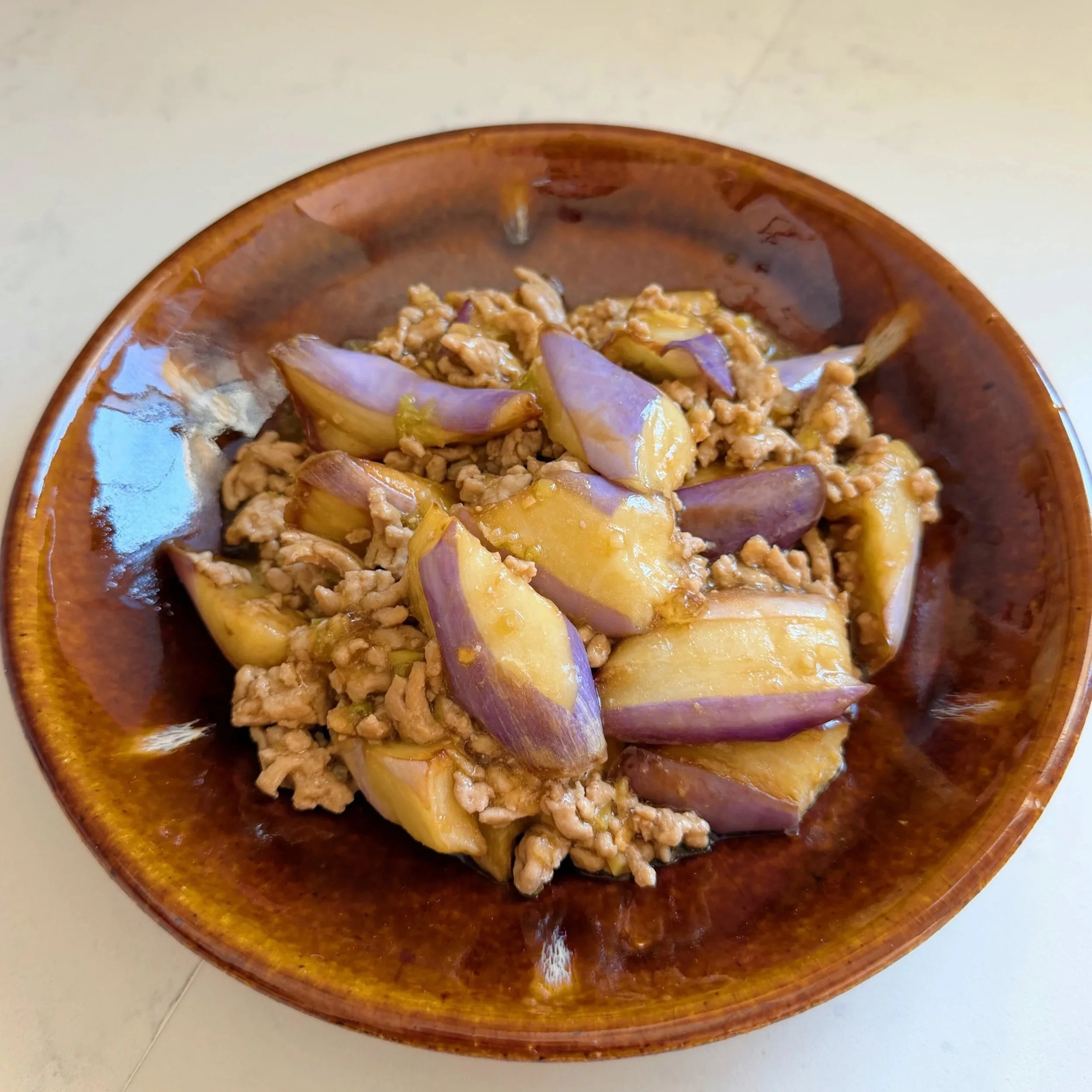
Mabo Nasu (Mapo Eggplant) – A Delicious Twist on a Japanese Classic
If you love Mabo Tofu (Mapo Tofu), you’re going to want to try this Japanese-style variation: Mabo Nasu (麻婆茄子), or Mapo Eggplant.
Instead of the traditional tofu, this version uses tender eggplant and ground pork, simmered in a savory, miso-based sauce. The eggplant soaks up all those delicious flavors, making every bite incredibly satisfying. It’s one of those dishes that’s especially good served over a bowl of steaming Japanese rice.
What I love about Mabo Nasu is how easy it is to adjust for the whole family. Traditional Mapo dishes can be quite spicy, but this Japanese-style version doesn’t have to be spicy at all. If you have little ones or simply prefer milder flavors, you can leave out the chili and still have a delicious, savory dish.
What Is Mabo Nasu?
Mabo Nasu is a popular Japanese home-cooking dish inspired by Sichuan-style Mapo Tofu. While Mabo Tofu is made with tofu, Mabo Nasu uses eggplant as the main ingredient.
Japanese versions often have a milder, more savory flavor profile, making them approachable for everyday family meals. The combination of eggplant, ground pork, miso, and soy sauce creates a rich and flavorful sauce that pairs especially well with rice.
Why You'll Love This Recipe
Easy one-pan meal – Perfect for a busy weeknight.
Family-friendly – Make it mild or add some spice for adults.
Full of flavor – Miso and soy sauce create a rich, savory sauce.
Great with rice – Spoon it over hot Japanese rice for a satisfying meal.
A delicious way to enjoy eggplant – The eggplant absorbs all the flavorful sauce as it cooks.
Make It Spicy or Keep It Mild
One of the best things about making Mabo Nasu at home is that you can easily adjust the spice level.
For a mild, family-friendly version, simply leave out the chili.
For a spicy version, add chili bean paste, chili oil, or red pepper flakes to the sauce. You can also add the spice only to the adults' portions at the end, making it easy to serve the same dish to the whole family.
RECIPE
Servings: 4
Time: 30 min
Ingredients:
2 medium-sized eggplants
1 lb ground pork
2 cloves garlic
2 slices ginger
2 pcs green onion
1 tbsp sake
salt
2 tbsp miso
1 tbsp soy sauce
1 tsp torigara (chicken stock powder)
1 ½ cup water
1 tbsp potato starch (+ 1 tbsp water)
Instructions:
Prepare the ingredients
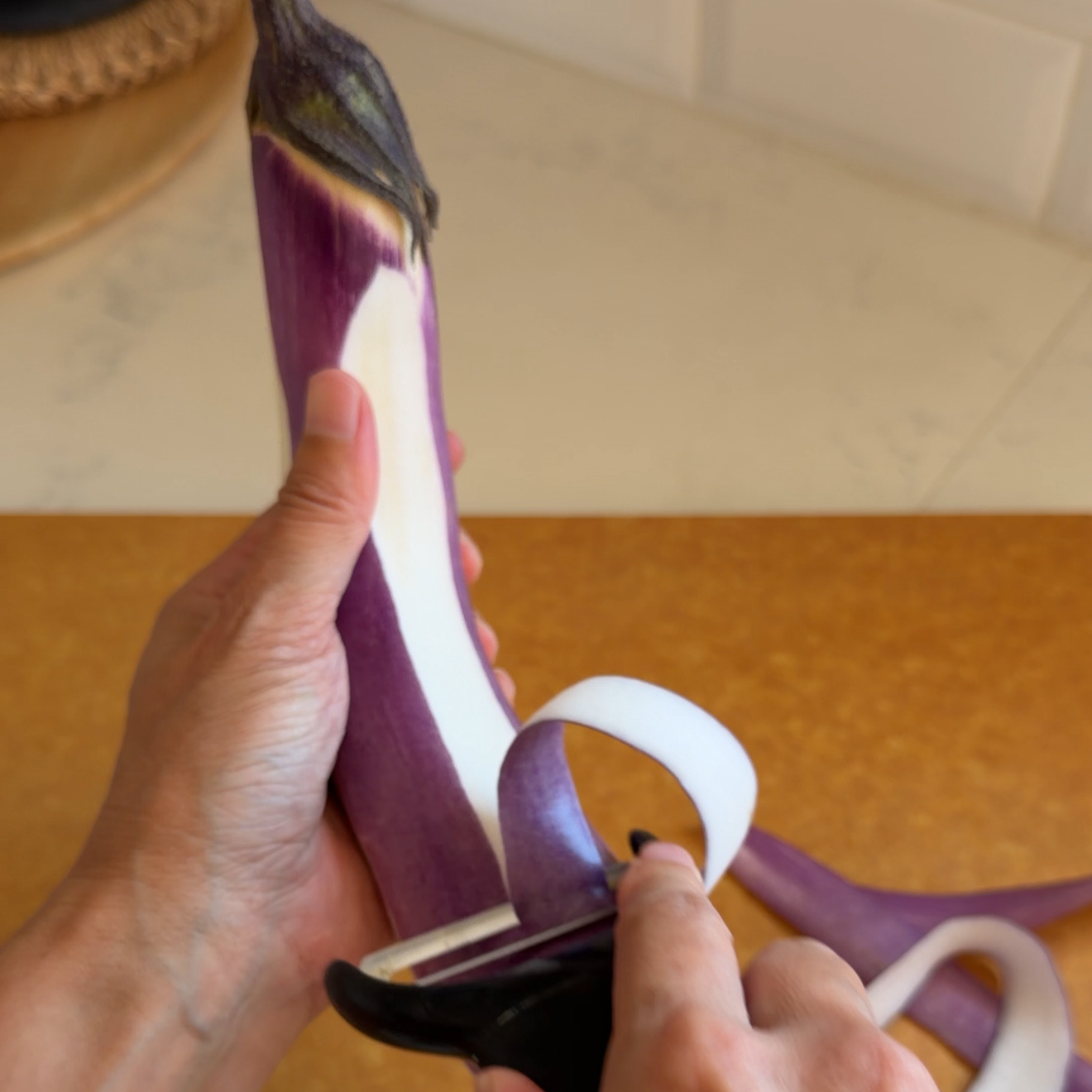
Peel partially the eggplants - leave some skin to keep the cut shapes.
Cut the eggplant into bite-sized pieces.
Chop the garlic ginger, green onions.
Fry the eggplant
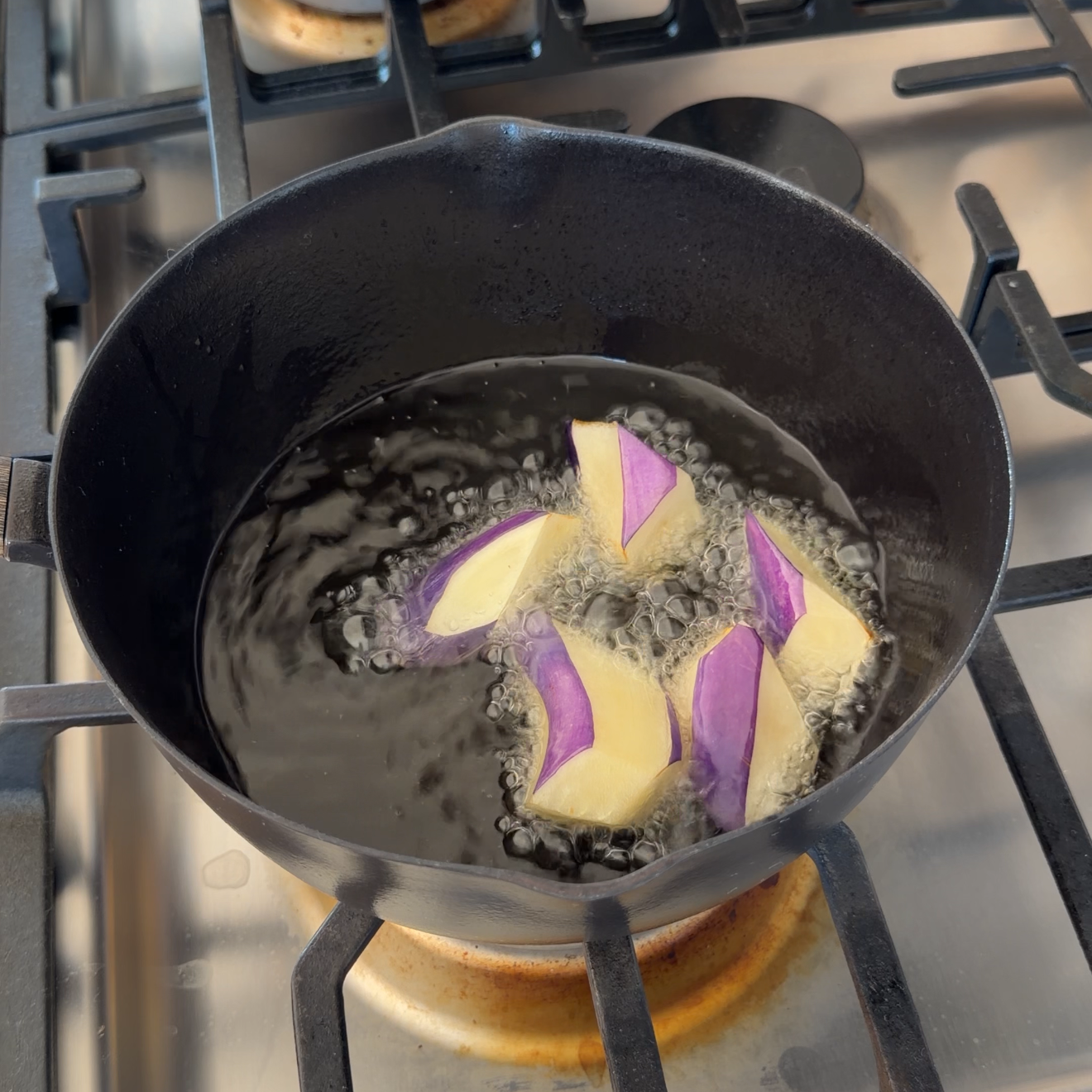
Heat a pan or a pot over medium-high heat and add enough neutral oil for frying.
Add the eggplant and cook until the pieces are lightly browned and beginning to soften.
Remove the eggplant and set aside.
Cook the pork and aromatics
Heat a pan to medium heat and add a small drizzle of sesame oil.
Add the garlic, ginger, green onions, and sauté for about 1 minutes, until fragrant.
Add the ground pork and season with a pinch of salt and sake.
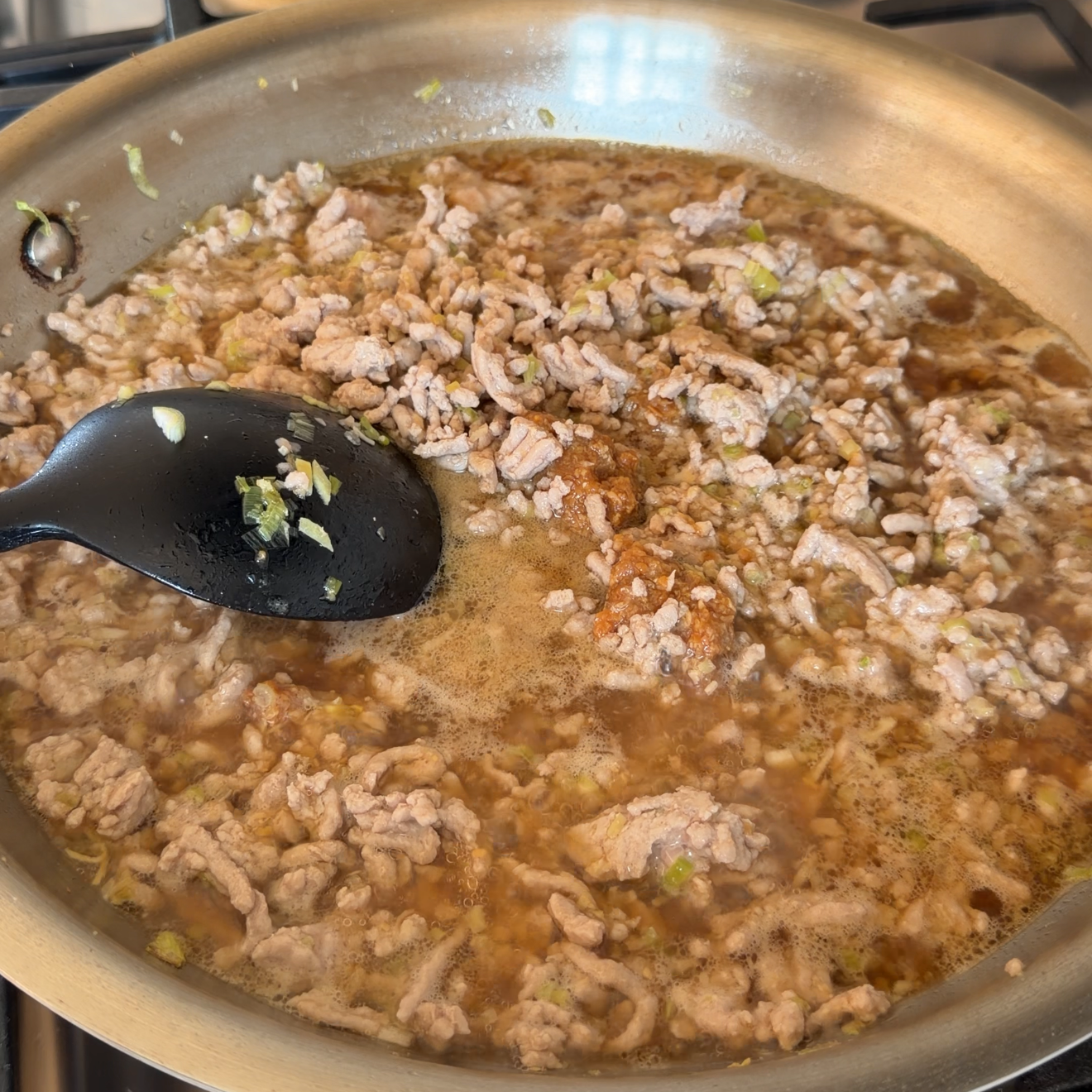
Stir-fry until the pork is browned and completely cooked through.
Add torigara, soy sauce, miso, and water and bring it to a bowl.
Add the eggplant and slurry
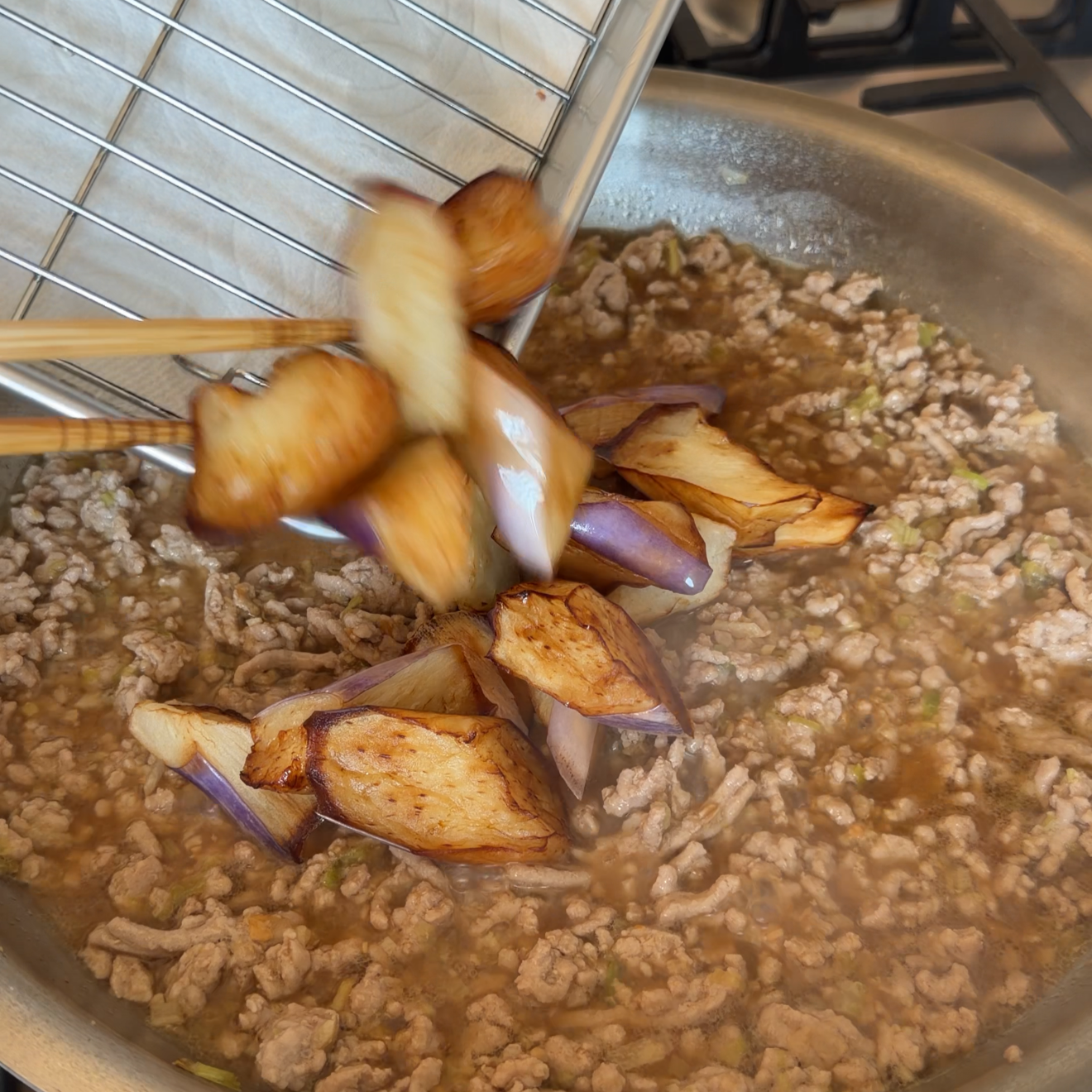
Return the cooked eggplant to the pan and gently toss everything together.
Mix the potato starch and water to make slurry.
Pour it into the pan, cook until the sauce thickens.
FAQ
What is Mabo Nasu?
Mabo Nasu (麻婆茄子) is a Japanese-style dish inspired by Mapo Tofu. Instead of tofu, it uses eggplant (nasu) cooked with ground pork in a savory, flavorful sauce. It’s a popular Japanese home-cooking dish and is especially delicious served over rice.
Is Mabo Nasu spicy?
It can be, but it doesn't have to be! This recipe is naturally mild because it doesn't include chili. For a spicy version, you can add chili bean paste, chili oil, or red pepper flakes.
What does “Nasu” mean?
“Nasu” (茄子) is the Japanese word for eggplant. So, Mabo Nasu essentially means Mapo Eggplant.
Can I make Mabo Nasu without pork?
Yes. You can substitute the ground pork with ground chicken, turkey, or beef. For a vegetarian version, try crumbled tofu, mushrooms, or your favorite plant-based ground meat.
What kind of eggplant should I use?
Most varieties of eggplant will work. Japanese or Chinese eggplant are especially good because they are tender and cook quickly, but regular globe eggplant works well too.
How do I prevent the eggplant from becoming too oily?
Eggplant absorbs oil quickly. Cooking it separately and removing it from the pan before cooking the pork helps control the amount of oil in the finished dish. You can also sauté, bake, or air-fry the eggplant instead of frying it.
What is torigara?
Torigara is a Japanese seasoning, chicken base soup stock. It adds savory, umami flavor to dishes like Mabo Nasu. If you don't have it, you can substitute another chicken stock powder or granulated chicken bouillon.
Can I make Mabo Nasu ahead of time?
Yes. Mabo Nasu can be made ahead and reheated gently on the stovetop. The sauce may thicken as it sits, so add a small splash of water when reheating if needed.
How should I serve Mabo Nasu?
The classic way to enjoy it is over cooked rice. The rice soaks up the savory sauce and makes it a satisfying complete meal.
Can I freeze Mabo Nasu?
No I wouldn’t. The texture of the eggplant may become softer after freezing and thawing.
You May Also Like
If you're looking for another comforting Japanese dinner, try this Tamago Don.
For a refreshing summer noodle dish, check out my Hiyashi Chuka recipe.
Pair this ramen with a light Napa Cabbage Tuna Salad.
This Broccoli Egg Salad makes an easy Japanese-style side dish.