Simmered Pork Stuffed Inari

Simmered Pork Stuffed Inari (Tofu Pouch)
Looking for a new way to enjoy inari age? These simmered pork-stuffed inari pouches are a delicious Japanese home-cooked dish filled with juicy ground pork and colorful vegetables.
Inari pouches, called aburaage in Japanese, are thin slices of deep-fried tofu that can be opened up and filled with all kinds of ingredients. While they’re often used to make Inari Sushi, they’re also wonderful for savory dishes like this one.
For this recipe, I mix ground pork with carrots, edamame, and scallions, then stuff the mixture into the tofu pouches. Everything is simmered in a savory soy sauce-based broth flavored with dashi, mirin, and fresh ginger. The result is a tender, flavorful dish that goes perfectly with a bowl of steamed rice.
One of my favorite things about this recipe is that it tastes even better the next day. I like to make an extra batch so my family can enjoy the leftovers in their bento boxes. As the stuffed tofu pouches sit overnight, they absorb even more of the delicious simmering broth.
If you enjoy Japanese home cooking, this is a comforting and practical recipe to add to your dinner rotation.
What Is Aburaage?
Aburaage is a Japanese ingredient made from thin slices of tofu that are deep-fried until they develop a light, airy texture. The inside can be opened to create a pouch, making it perfect for stuffing with rice, meat, or vegetables.
You may recognize aburaage from Inari Sushi, where the tofu pouches are typically seasoned with a sweet soy sauce-based sauce and filled with sushi rice. In this recipe, the pouches are filled with a savory pork mixture and simmered in a flavorful dashi broth instead.
You can usually find aburaage in the refrigerated or frozen section of Japanese and Asian grocery stores.
Why You'll Love This Recipe
A different way to enjoy inari pouches: Try something beyond the usual Inari Sushi.
A complete, flavorful filling: Ground pork, carrots, edamame, and scallions create a tasty combination of meat and vegetables.
Comforting Japanese flavors: Dashi, soy sauce, mirin, and ginger make a savory broth that soaks into the tofu.
Great for meal prep: Make it ahead for dinner or pack the leftovers in your bento the next day.
Tips for Making the Best Pork-Stuffed Inari
Use a Drop Lid for Even Simmering
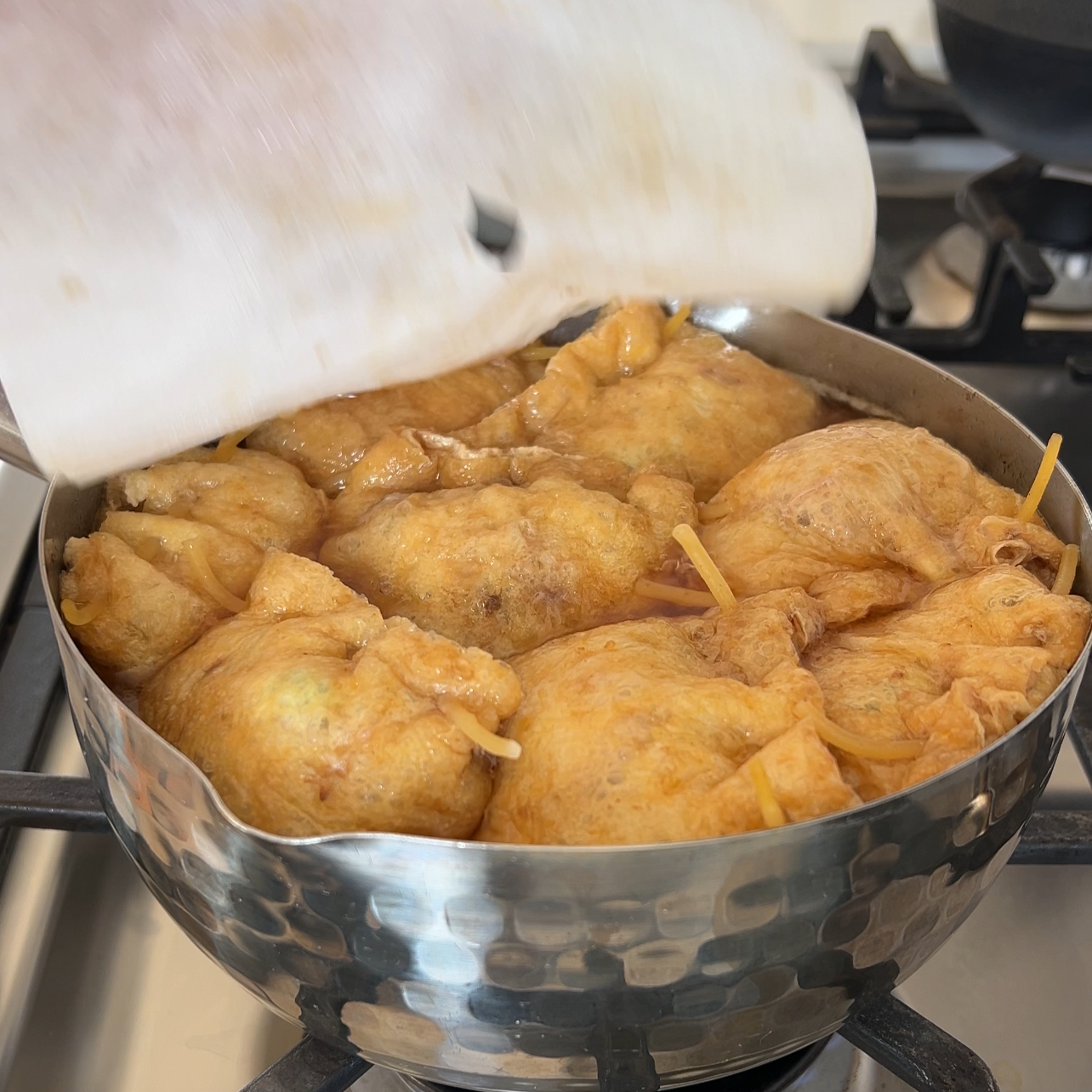
A drop lid sits directly on top of the ingredients rather than covering the entire saucepan. It helps circulate the simmering liquid, allowing the stuffed tofu pouches to absorb the sauce evenly.
If you don't have one, cut a circle of parchment paper slightly smaller than your saucepan and make a small hole in the center to let steam escape.
Make It Ahead for Even More Flavor
This dish is excellent for meal prep. Let the cooked pouches cool, then refrigerate them with some of the simmering liquid. The flavors continue to develop as they rest, making the leftovers especially delicious the next day.
Try Different Fillings
You can substitute ground chicken for the ground pork if you prefer a lighter flavor. For a vegetarian variation, use crumbled firm tofu and add chopped shiitake mushrooms for extra umami.
You can also add finely chopped bell peppers or other vegetables to the filling.
RECIPE
Servings: 10 pcs
Time: 30 minutes
Ingredients:
5 pcs aburaage (inari pouch)
1 lb ground pork
1 pc small carrot
15-20 pcs edamame
1 pc green onion
1 tbsp sake
Salt
Sauce
3 cups water
3 tsp dashi powder
2 tbsp sugar
2 tbsp soy sauce
2 tbsp mirin
1/2 tbsp grated ginger
Instructions:
Prepare the aburaage tofu pouch:
Pour boiling water over the aburaage or wipe off the excess grease with a paper towel.
Cut them in half, then roll a chopstick over the outer surface of the pouch to make it easier to open.
Prepare the vegetabels:
Chop the carrot and green onion, and grate the ginger.
Defrost the edamame.
Mix the ingredients:
In a mixing bowl, combine ground pork, carrot, green onion, edamame, sake, and a pinch of salt.
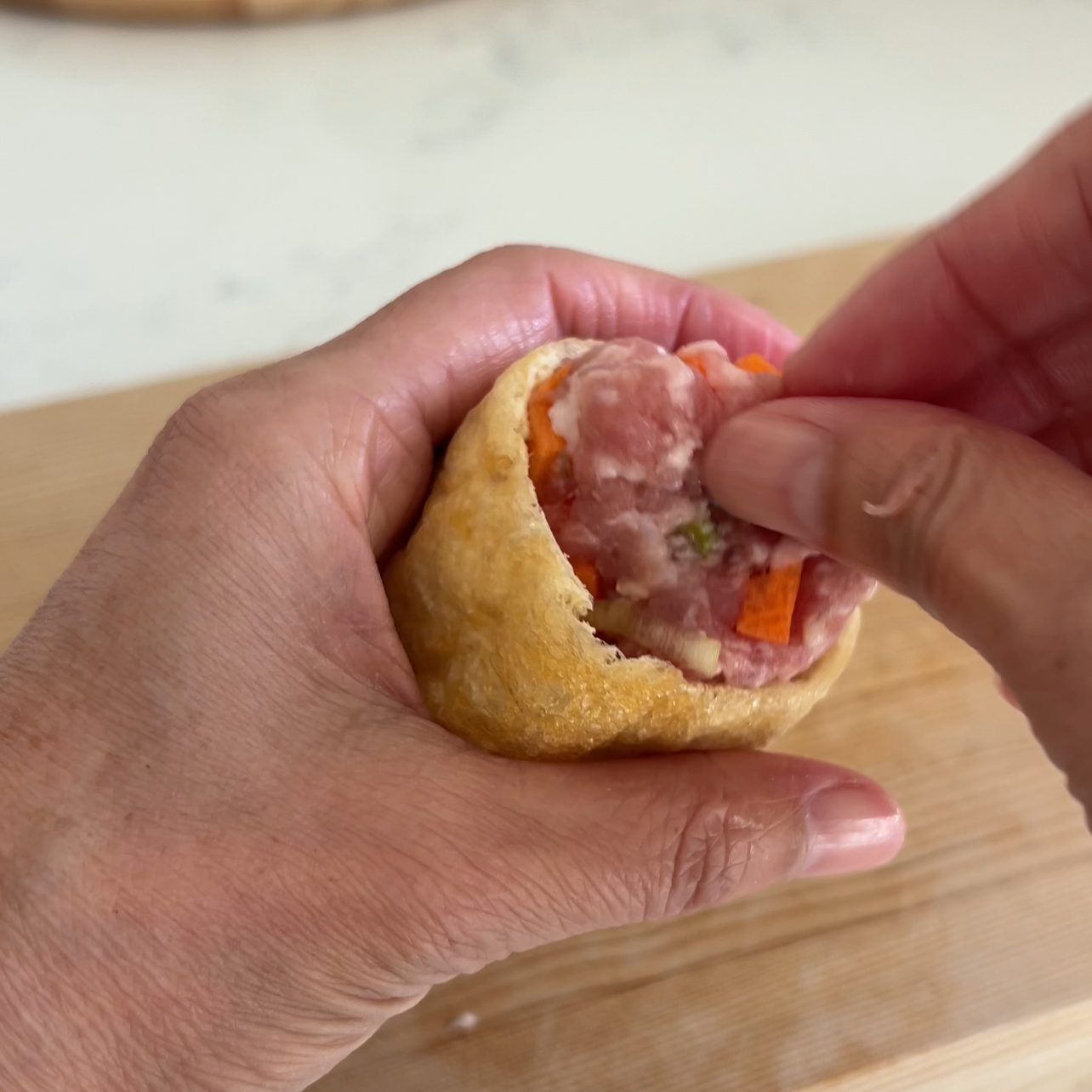
Mix well and divide into 10 golf ball-sized portions.
Stuff the tofu pouch:
Stuff each meatball into an aburaage pouch.
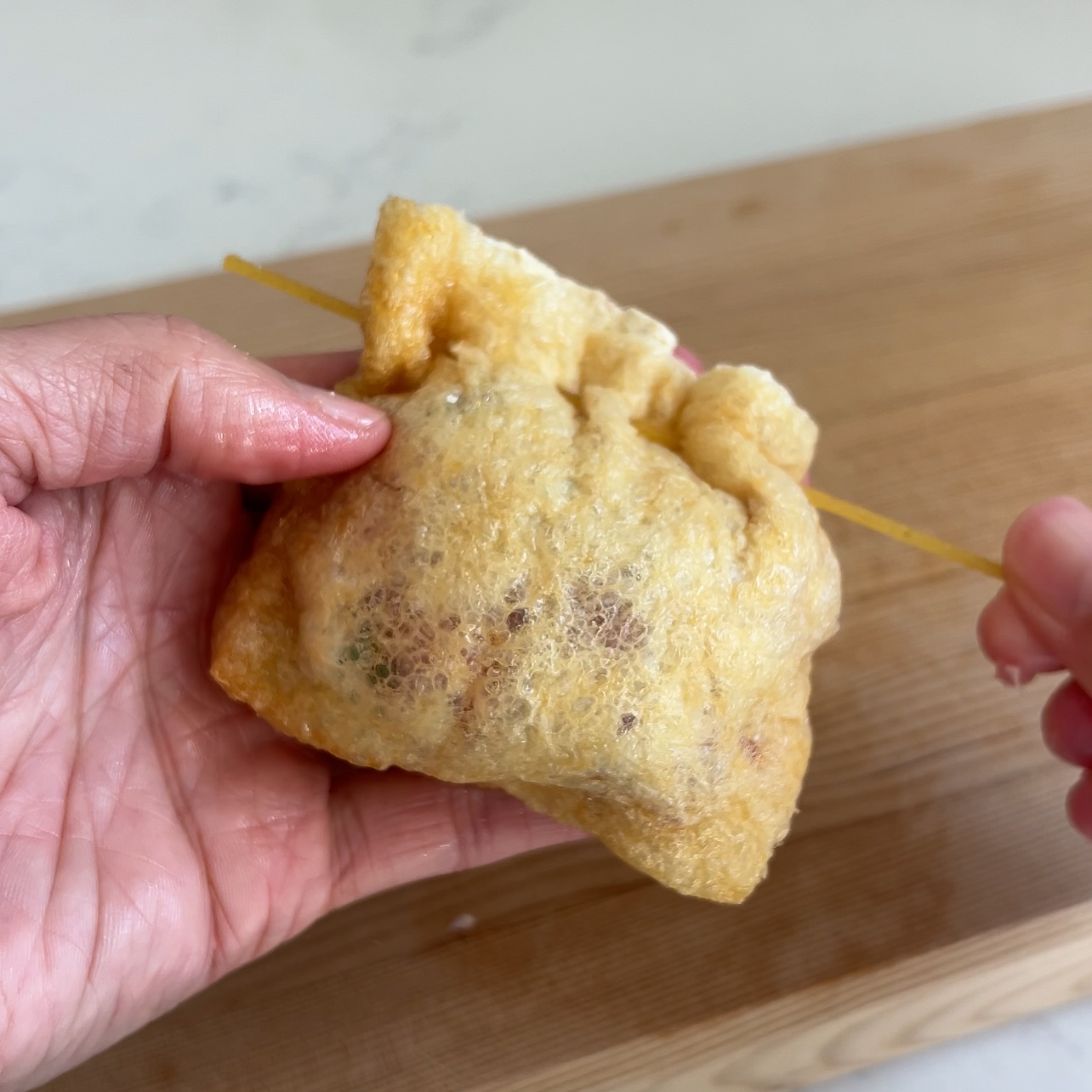
Seal it with an uncooked spaghetti strand or a toothpick.
Simmer
In a saucepan, add water, dashi powder, sugar, soy sauce, mirin, and grated ginger.
Heat the sauce until the sugar is dissolved.
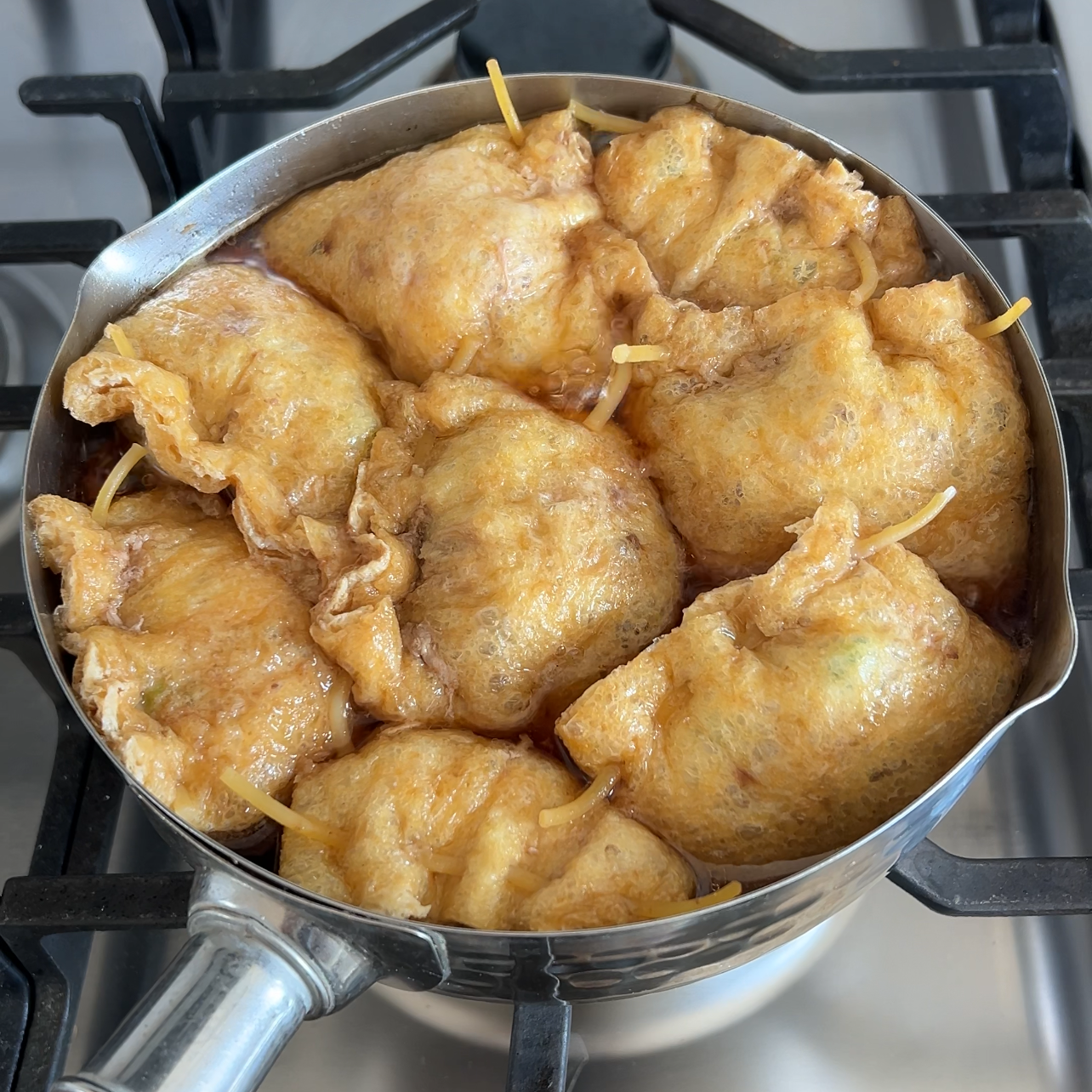
Add the stuffed aburaage pouches, and cover with a drop lid.
Simmer for 20 minutes.
FAQ
What is the difference between aburaage and inari age?
Aburaage is thinly sliced, deep-fried tofu. When it is prepared as a pouch for dishes such as Inari Sushi, it is often called inari age or inari aburaage. The terms can overlap, depending on the product and preparation.
Can I use ground chicken instead of ground pork?
Yes. Ground chicken works well as a substitute. The filling may be a little leaner, but the tofu pouches and savory broth help keep the dish flavorful.
How do I keep the tofu pouches from opening while cooking?
Open the pouches carefully to avoid tearing them, and don't overfill them. Seal each pouch with a short strand of uncooked spaghetti or toothpick. Keep the broth at a gentle simmer rather than a vigorous boil.
Can I make pork-stuffed inari ahead of time?
Yes. You can prepare the dish a day ahead and refrigerate it after cooking. Store the pouches with some of their simmering liquid so they stay moist and flavorful. Reheat thoroughly before serving.
How should I store leftovers?
Allow the cooked pouches to cool promptly, then refrigerate them in an airtight container with some of the broth. For food safety, refrigerate within two hours of cooking and enjoy within 3–4 days.
Can I freeze simmered pork-stuffed inari?
Yes, although the texture of the tofu may change slightly after freezing. Cool the cooked pouches promptly, freeze them in an airtight container with some of the broth, and thaw in the refrigerator before reheating thoroughly.
What can I use instead of a drop lid?
A circle of parchment paper with a small hole in the center works as a simple substitute. Make it slightly smaller than the saucepan so it rests directly on the ingredients.
You May Also Like
If you're looking for another comforting Japanese dinner, try this Tamago Don.
For a refreshing summer noodle dish, check out my Hiyashi Chuka recipe.
Pair this ramen with a light Napa Cabbage Tuna Salad.
This Broccoli Egg Salad makes an easy Japanese-style side dish.