Inari Mochi
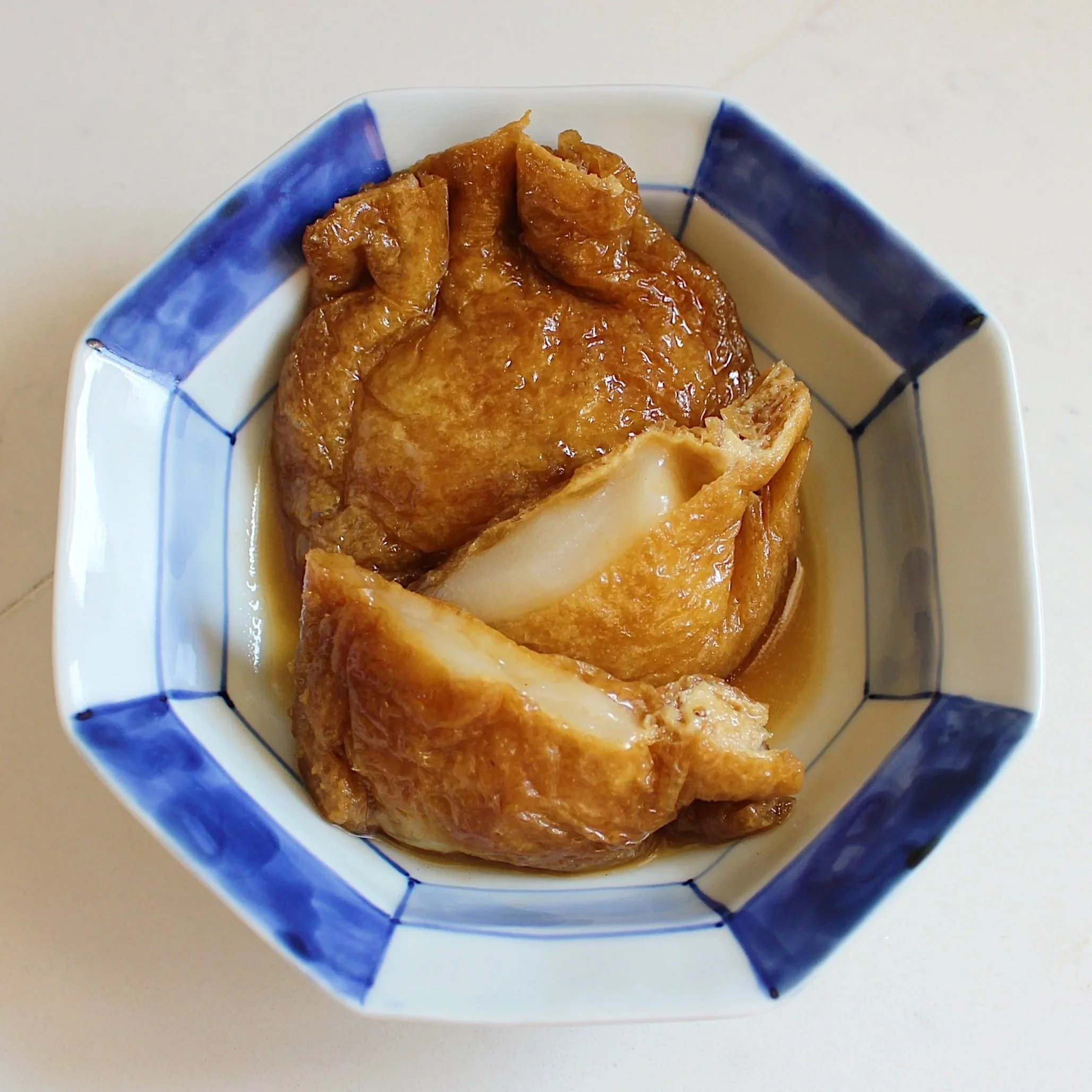
Inari Mochi (Mochi Kinchaku) – Chewy Mochi Stuffed in Savory Tofu Pockets
If you love mochi and Japanese comfort food, you’re going to want to try Inari Mochi! Also known as Mochi Kinchaku, this simple Japanese dish combines chewy mochi with aburaage, or deep-fried tofu pouches, all simmered in a sweet and savory soy-based broth.
The result is incredibly comforting: the aburaage soaks up the flavorful broth while the mochi becomes soft, stretchy, and chewy inside. It’s one of my family’s favorite Japanese dishes and makes a cozy addition to dinner, especially during the colder months.
In Japan, Mochi Kinchaku is most commonly enjoyed as part of oden, a classic Japanese one-pot dish where ingredients are gently simmered in a dashi-based broth. You may also find it at Japanese convenience store oden counters, where it makes an easy and satisfying snack or side dish.
The best part? You only need a handful of ingredients to make it at home. Here’s how to make Inari Mochi with just aburaage, mochi, and a simple savory broth.
What Is Inari Mochi (Mochi Kinchaku)?
Mochi Kinchaku literally refers to mochi tucked inside a pouch, with kinchaku meaning a traditional Japanese drawstring pouch or purse.
The dish uses aburaage as the pouch. Aburaage is thinly sliced tofu that has been deep-fried, creating a light, slightly chewy exterior that is perfect for soaking up flavorful broth.
Once filled with mochi and simmered, the aburaage becomes tender and flavorful while the mochi inside turns soft, stretchy, and chewy. It’s a wonderfully simple combination of textures.
You’ll most often see Mochi Kinchaku served as one of the many ingredients in oden, alongside items such as daikon, eggs, konnyaku, and fish cakes.
A Little History of Mochi Kinchaku and Oden
Oden is one of Japan’s best-known winter comfort foods. Its history can be traced back to the Edo period (1603–1868), when dengaku—tofu and other ingredients served with miso—was popular. Over time, the dish evolved into the broth-simmered oden enjoyed throughout Japan today.
As oden developed, a wide variety of ingredients became part of the dish, including daikon, eggs, konnyaku, fish cakes, and tofu products. Mochi Kinchaku became another popular addition, pairing chewy mochi with aburaage in a convenient little pouch.
The name kinchaku comes from its resemblance to a traditional Japanese drawstring bag. The aburaage essentially works like an edible pouch, holding the mochi inside while absorbing the flavorful oden broth.
Today, Mochi Kinchaku is a familiar favorite at oden restaurants, izakayas, and Japanese convenience stores, especially during the colder months.
Why You’ll Love Inari Mochi
Only a few ingredients – It’s surprisingly simple to make.
Chewy and savory – Soft, stretchy mochi meets flavorful aburaage.
Perfect comfort food – Especially on a chilly day.
Great for oden – Add it to your favorite homemade oden.
Family-friendly – A fun and satisfying Japanese dish that kids and adults can enjoy.
If you’ve never tried mochi in a savory broth before, this is a great place to start. The combination of chewy mochi, flavorful tofu, and sweet-savory dashi broth is seriously addictive!
RECIPE
Servings: 10 pcs
Time: 20 minutes
Ingredients:
5 pcs Aburaage (tofu pouch, rectangular shape)
5 pcs Mochi
2 cups Water
3 tbsp soy sauce
3 tbsp mirin
2 tbsp Sugar
2 tsp dashi powder (Japanese soup stock)
Instructions:
Prepare the Aburaage:
Pour boiling water over the aburaage to remove excess grease, then pat them dry with a paper towel.
Cut each aburaage rectangle in half to create square-shaped pockets.
Gently roll a chopstick inside each piece to open the pockets easily.
Stuff the Pockets:
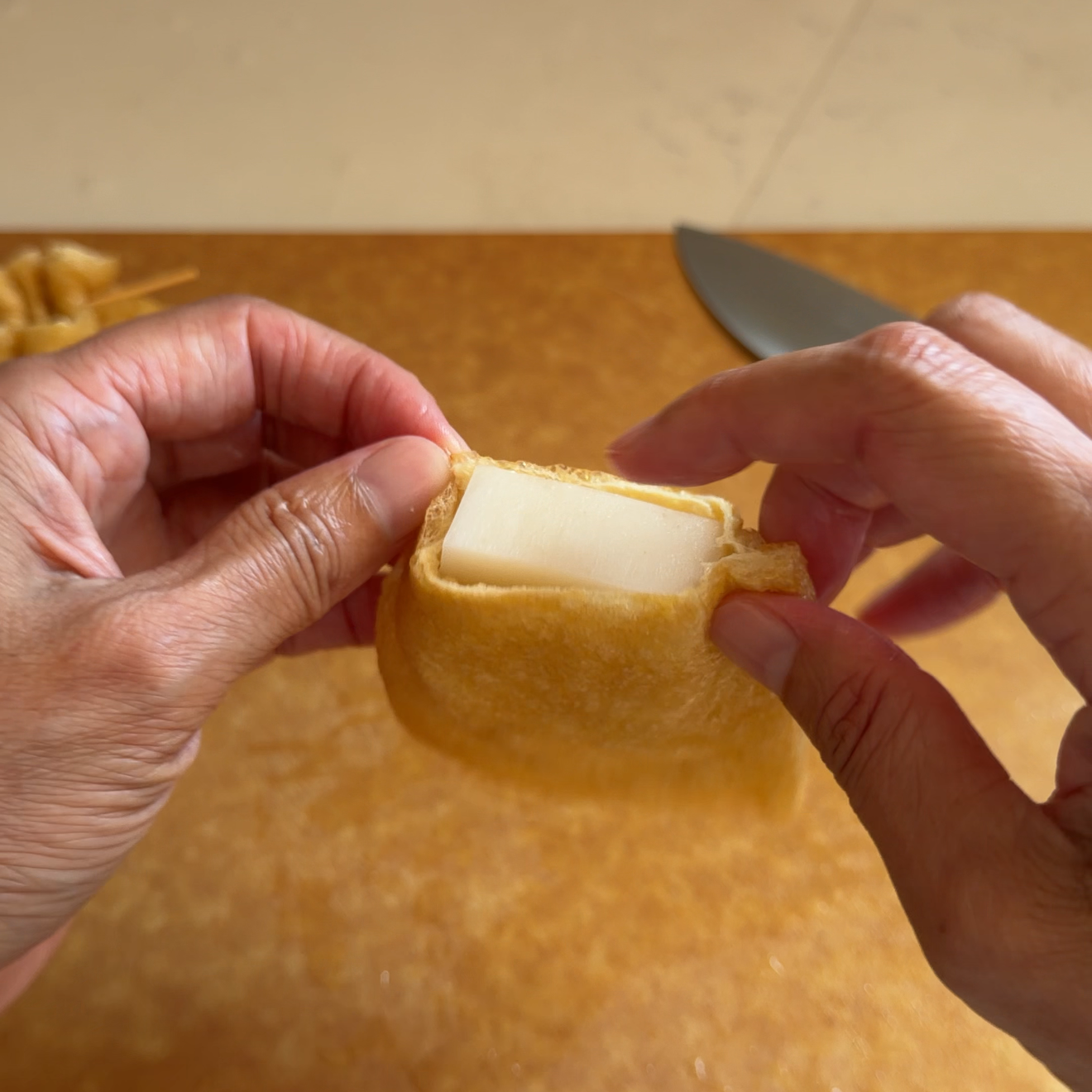
Cut the rectangle shaped mochi into halves to fit inside the aburaage pockets.
Place one piece of mochi into each pocket.
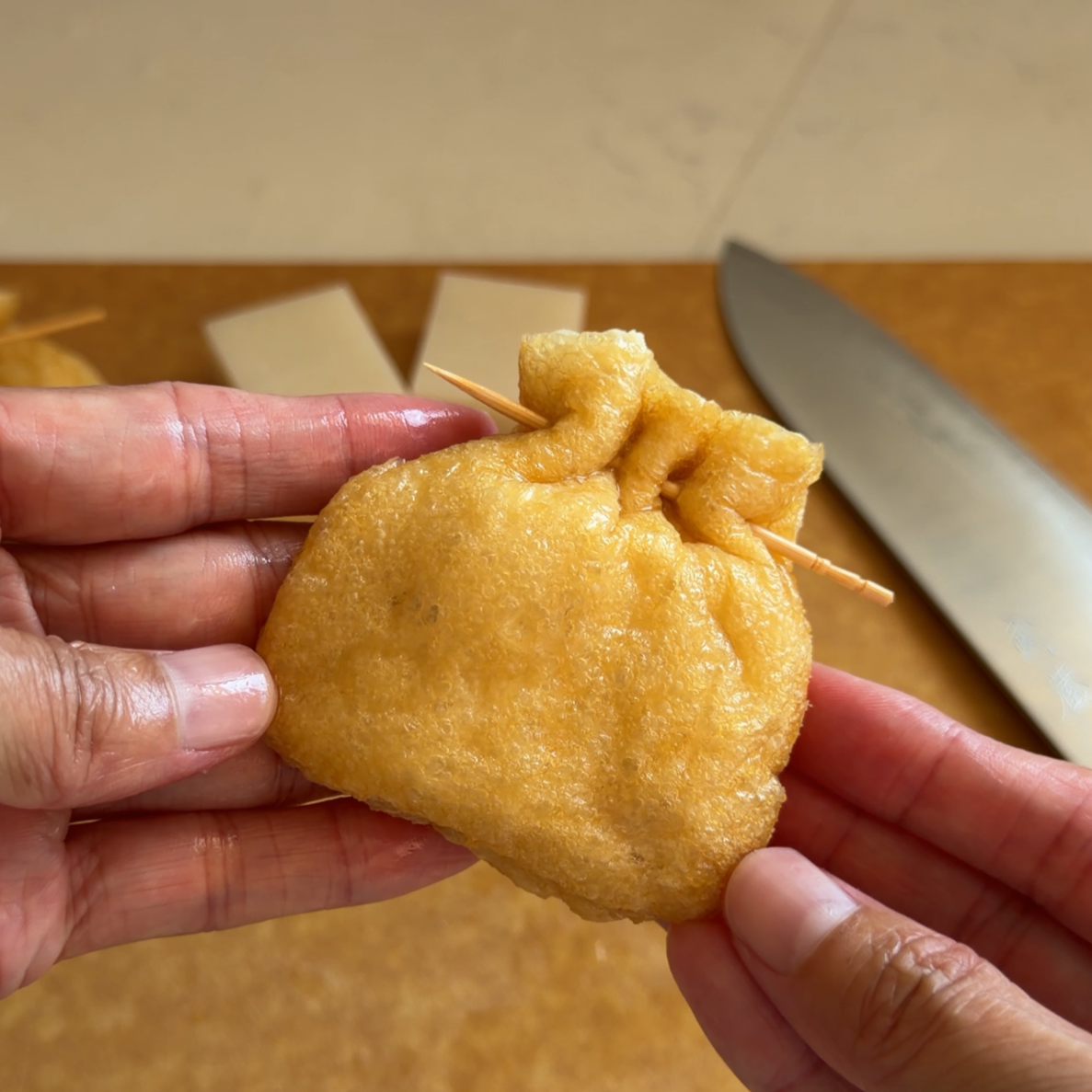
Use a small length of uncooked spaghetti (or toothpicks) to seal the opening by threading it through the edges.
Simmer the Inari Mochi:
In a medium-sized pot, combine water, soy sauce, mirin, sugar, and dashi powder.
Bring the mixture to a gentle simmer over medium heat.
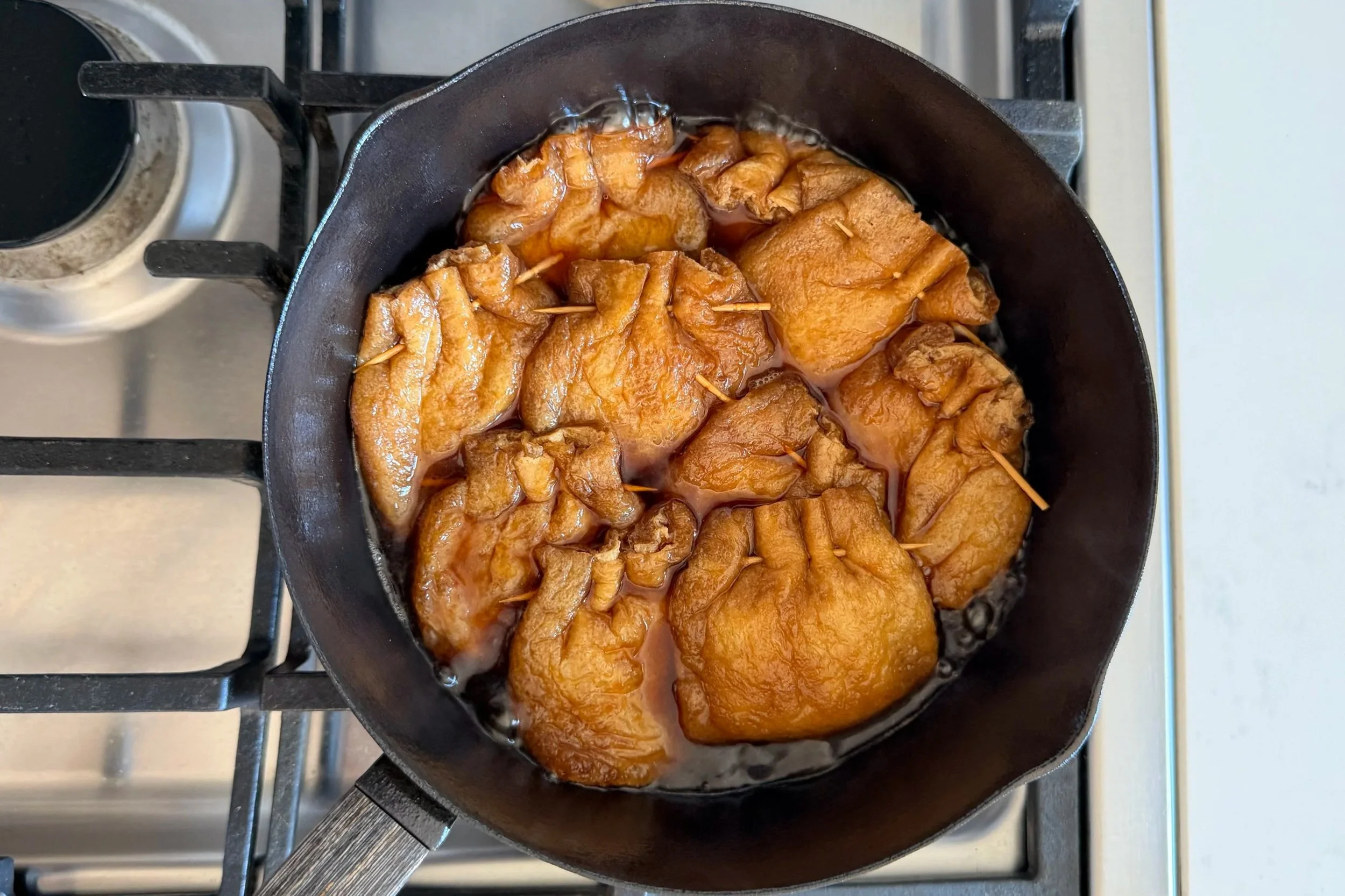
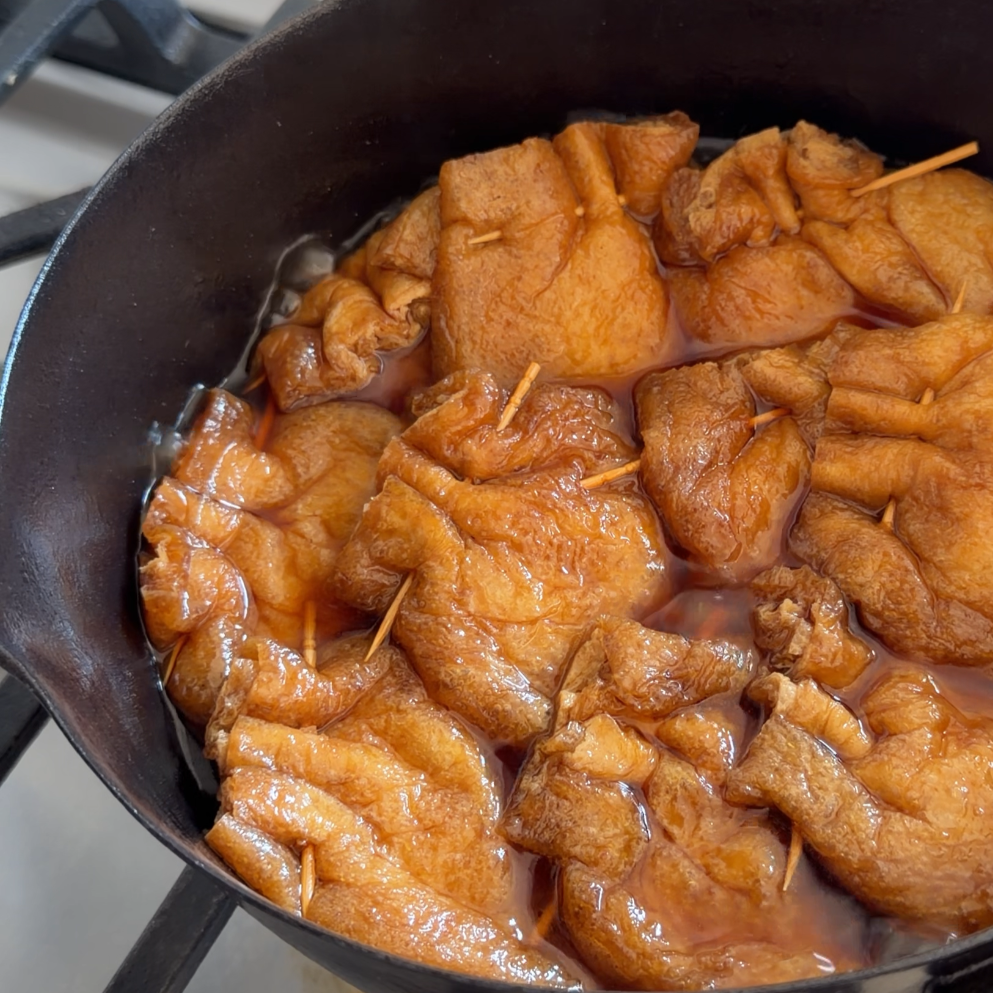
Add the mochi-filled aburaage pockets to the pot, ensuring they are submerged in the broth.
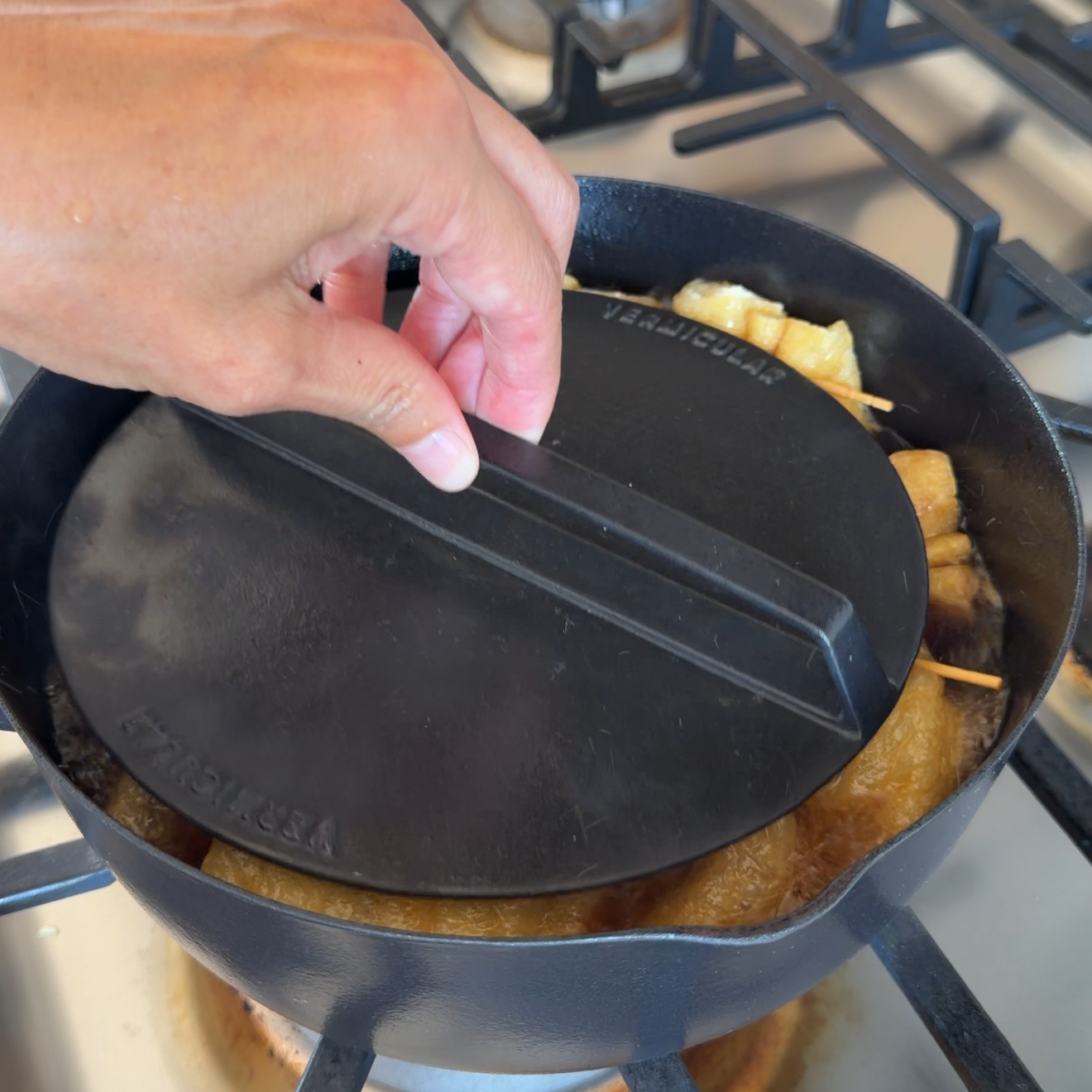
Place a drop lid (or parchment paper) on top to keep them immersed.
Simmer on low heat for about 15 minutes, occasionally spooning the broth over the pockets.
Serve and Enjoy:
Once the mochi inside has softened and the aburaage has absorbed the savory broth, remove from heat.
Serve while it’s hot.
FAQ
What is Inari Mochi?
Inari Mochi is mochi stuffed inside aburaage, or deep-fried tofu pouches, and simmered in a sweet and savory dashi-based broth. It is also commonly called Mochi Kinchaku and is a popular ingredient in Japanese oden.
What does Mochi Kinchaku mean?
Kinchaku means a traditional Japanese drawstring pouch or purse. The name describes the way aburaage wraps around the mochi like a little pouch.
What kind of mochi should I use for Inari Mochi?
Use plain Japanese kiri-mochi, which is firm rectangular or square mochi sold in packages. Avoid sweetened or flavored mochi.
Do I need to boil the aburaage before stuffing it?
You don't need to boil it, but pouring boiling water over the aburaage helps remove some of the excess oil and makes it easier to open the pockets.
Can I make Inari Mochi ahead of time?
Yes. You can prepare the Inari Mochi ahead of time and gently reheat it in the broth before serving. The mochi is best enjoyed warm and chewy.
What can I serve with Inari Mochi?
Inari Mochi is delicious as part of an oden spread, but you can also serve it as a side dish or snack alongside rice, vegetables, or other Japanese comfort foods.
Can I add Inari Mochi to homemade oden?
Absolutely! Add the stuffed tofu pouches toward the end of cooking and simmer gently until the mochi becomes soft and chewy.