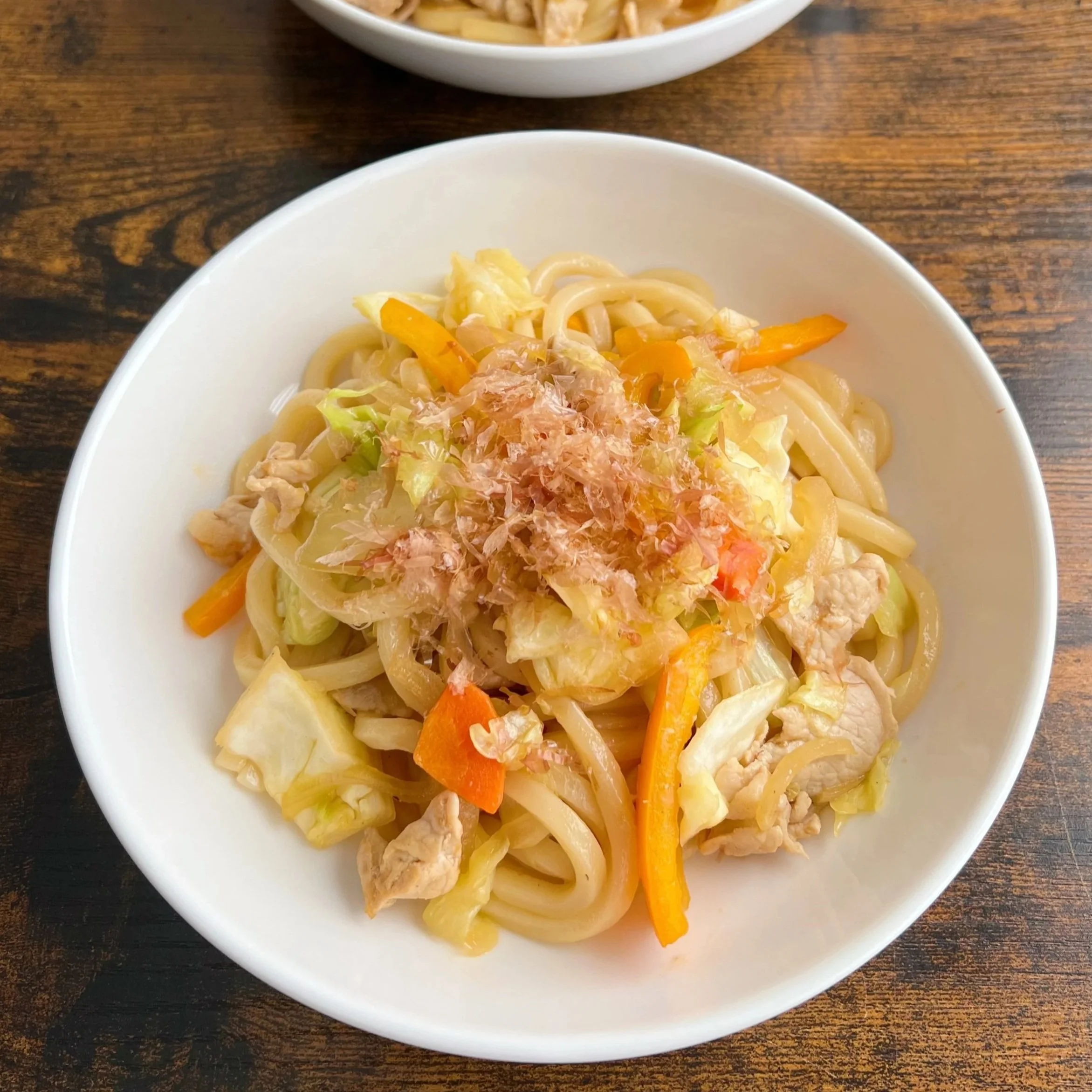
Yaki Udon
Yaki Udon – A Flavorful Twist on Traditional Udon Noodles
When we think of udon, we often imagine a steaming bowl of comforting noodle soup. But in Japan, udon isn’t just for soup. One of the most popular home-style variations is Yaki Udon (焼きうどん) — a savory stir-fried noodle dish made with thick, chewy udon, tender slices of pork, and crisp vegetables.
Yaki Udon is quick, satisfying, and incredibly versatile. It’s the kind of meal you can pull together in 20 minutes, making it perfect for busy weeknights. The combination of soy sauce, dashi, and sesame oil creates a deep umami flavor, while the katsuobushi (bonito flakes) on top add that classic Japanese finish.
If you love simple Japanese home cooking, this is a must-try recipe.
RECIPE
Servings: 3-4
Time: 20 min
Ingredients:
2 pcs frozen udon
1/2 lb thin sliced pork (or your favorite protein)
salt (to season pork)
1 tbsp sake (to season pork)
1/2 pc small cabbage
1/2 pc medium carrot
1 bell pepper
1/2 pc onion
1 pack dashi powder
2 tbsp soy sauce
1 pack katsuobushi (bonito flake)
salt and pepper
Instructions:
Prepare the Vegetables and Meat
Thinly slice the onion, and cut cabbage, carrot, and bell pepper.
Cut the pork into bite sizes, season with salt and sake.
Cook the Pork
Heat a large pan over medium heat and drizzle in sesame oil.
Add the thinly sliced pork, stir-fry until fully cooked and lightly browned.
Stir-Fry the Vegetables
Add the onion and carrot to the pan first, as they take slightly longer to cook.
Stir-fry for 2–3 minutes.
Next, add the bell pepper and cabbage. S
Sprinkle in the dashi powder, and season with salt and pepper.
Stir-fry until the vegetables are tender but still slightly crisp.
Prepare the Udon
While the vegetables are cooking, bring a pot of water to a boil.
Add the frozen udon noodles and cook just until loosened and defrosted (about 1–2 minutes).
Drain well, rinse under the cold water to remove the excess starch.
*tip: Do not overcook the udon — they will continue cooking in the pan.
Combine and Season
Add the drained udon noodles to the pan.
Pour in the soy sauce and toss everything together quickly over medium-high heat.
Stir well so the noodles are evenly coated with the sauce and dashi flavor.
Finish with Katsuobushi
Turn off the heat and top generously with katsuobushi (bonito flakes).
The heat from the noodles will make the flakes gently dance — a signature look of Japanese stir-fried noodles.
Where is Yaki Udon from?
Yaki Udon, which translates to "fried udon," is said to have originated in Kokura, Fukuoka in Japan. One of the stories is that a noodle shops in the town used Udon noodles for theYakisoba dish preparation because they couldn’t find the proper noodles. The dish gained popularity for its simplicity and versatility, allowing people to make the most of the available ingredients.
Unlike its soup-based counterpart, Yaki Udon offers a distinct culinary experience. The stir-frying process imparts a smoky flavor and a delightful chewiness to the udon noodles. The combination of tender pork, crisp vegetables, and savory seasonings creates a harmonious blend of flavors. Yaki Udon also allows for customization, as you can incorporate your favorite ingredients and adjust the seasonings according to your preferences.
Tips for Perfect Yaki Udon
Use frozen udon for the best chewy texture.
Rinse the udon noodles after boiled to remove the starch, preventing soggy noodles.
Cook on medium-high heat to prevent sticky noodles.
Adjust soy sauce to taste depending on your preference.
You can substitute pork with chicken, shrimp, or tofu.